
Many aircraft structures are made of metal, and the most insidious form of damage to those structures is corrosion. From the moment the metal is manufactured, it must be protected from the deleterious effects of the environment that surrounds it. This protection can be the introduction of certain elements into the base metal, creating a corrosion-resistant alloy, or the addition of a surface coating of a chemical conversion coating, metal, or paint. While in use, additional moisture barriers, such as viscous lubricants and protectants, may be added to the surface.
The introduction of airframes built primarily of composite components has not eliminated the need for careful monitoring of aircraft with regard to corrosion. The airframe itself may not be subject to corrosion; however, the use of metal components and accessories within the airframe means the aircraft maintenance technician (AMT) must be on the alert for the evidence of corrosion when inspecting any aircraft.
This section introduces the nature, causes, and effects of corrosion in aircraft structures. For more in-depth information on the subject, refer to the latest edition of the Federal Aviation Administration (FAA) Advisory Circular (AC) 43-4, Corrosion Control for Aircraft. The AC is an extensive handbook that deals with the sources of corrosion particular to aircraft structures, as well as steps the AMT can take in the course of maintaining aircraft that have been attacked by corrosion.
Metal corrosion is the deterioration of the metal by chemical or electrochemical attack. This type of damage can take place internally, as well as on the surface. As in the rotting of wood, this deterioration may change the smooth surface, weaken the interior, or damage or loosen adjacent parts.
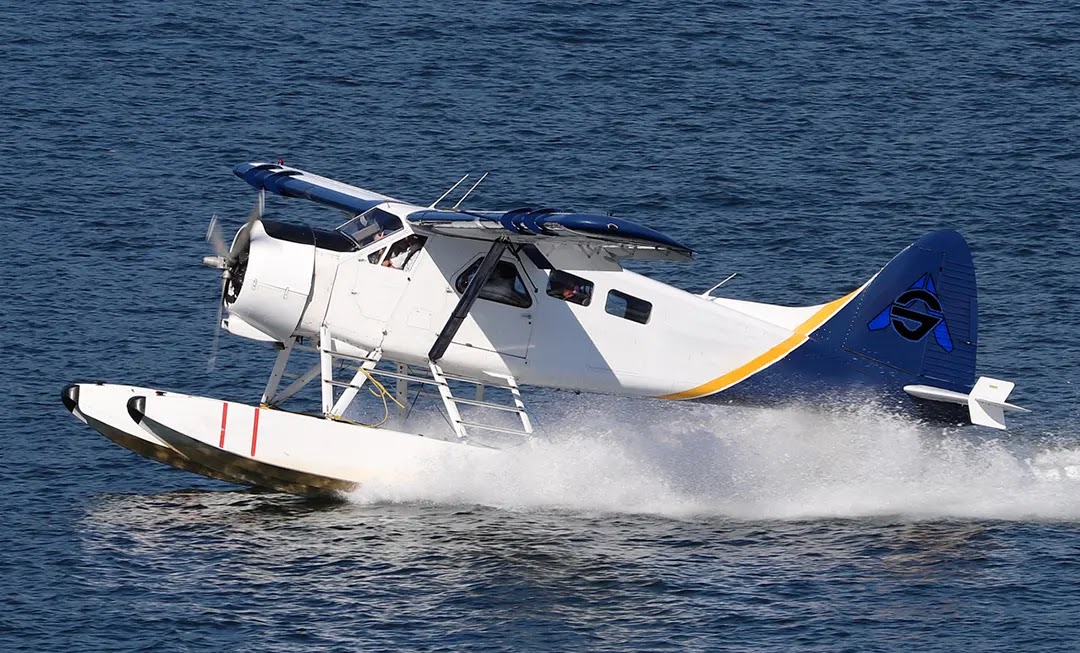
Water or water vapor containing salt combines with oxygen in the atmosphere to produce the main source of corrosion in aircraft. Aircraft operating in a marine environment, or in areas where the atmosphere contains industrial fumes that are corrosive, are particularly susceptible to corrosive attacks. [Figure 1]
If left unchecked, corrosion can cause eventual structural failure. The appearance of corrosion varies with the metal. [Figure 2]
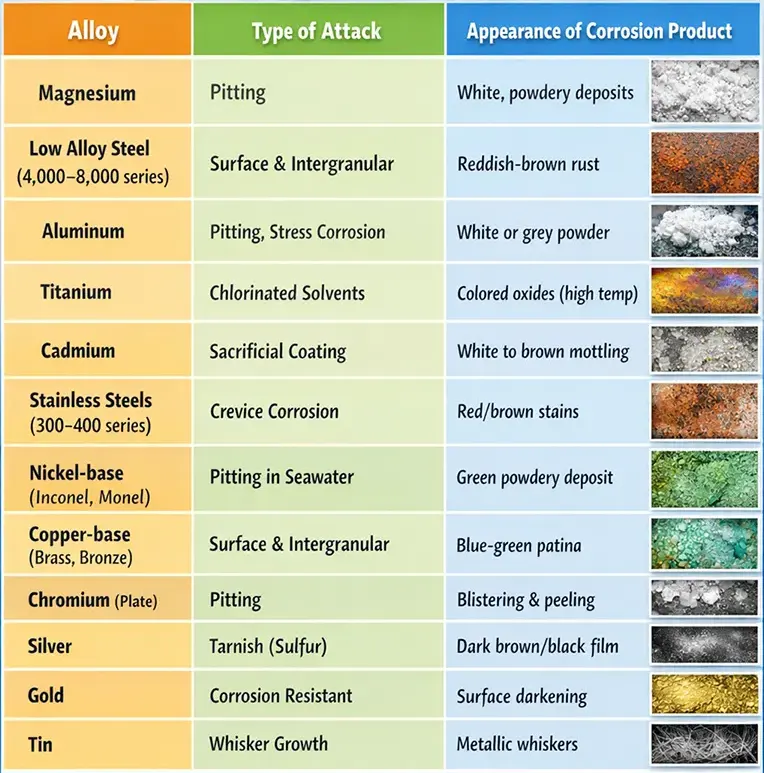
| Alloy | Type of attack to which alloy is susceptible | Appearance of corrosion product |
|---|---|---|
| Magnesium | Highly susceptible to pitting | White, powdery, snow-like mounds and white spots on surface |
| Low alloy steel(4,000–8,000 series) | Surface oxidation and pitting, surface, and intergranular | Reddish–brown oxide (rust) |
| Aluminum | Surface pitting, intergranular, exfoliation stress– corrosion and fatigue cracking, and fretting | White–to–grey powder |
| Titanium | Highly corrosion resistant; extended or repeated contact with chlorinated solvents may result in degradation of the metal’s structural properties at high temperature | No visible corrosion products at low temperature. Colored surface oxides develop above 700 °F (370 °C) |
| Cadmium | Uniform surface corrosion; used as sacriÿcial plating to protect steel | From white powdery deposit to brown or black mottling of the surface |
| Stainless steels (300–400 series) | Crevice corrosion; some pitting in marine environments; corrosion cracking; intergranular corrosion (300 series); surface corrosion (400 series) | Rough surface; sometimes a uniform red, brown, stain |
| Nickel–base (Inconel, Monel) | Generally has good corrosion resistant qualities; susceptible to pitting in sea water | Green powdery deposit |
| Copper–base Brass, Bronze | Surface and intergranular corrosion | Blue or blue–green powdery deposit |
| Chromium (Plate) | Pitting (promotes rusting of steel where pits occur in plating) | No visible corrosion products; blistering of plating due to rusting and lifting |
| Silver | Will tarnish in the presence of sulfur | Brown–to–black ÿlm |
| Gold | Highly corrosion resistant | Deposits cause darkening of re°ective surfaces |
| Tin | Subject to whisker growth | Whisker–like deposit |
Table 1. Corrosion of metals
On the surface of aluminum alloys and magnesium, it appears as pitting and etching and is often combined with a gray or white powdery deposit. On copper and copper alloys, the corrosion forms a greenish film; on steel, a reddish corrosion byproduct commonly referred to as rust.
When the gray, white, green, or reddish deposits are removed, each of the surfaces may appear etched and pitted, depending upon the length of exposure and severity of attack. If these surface pits are not too deep, they may not significantly alter the strength of the metal; however, the pits may become sites for crack development, particularly if the part is highly stressed. Some types of corrosion burrow between the inside of surface coatings and the metal surface, spreading until the part fails.