
Turbine-powered aircraft operate at high altitudes where temperatures can be extremely low. Under these conditions, water present in the aircraft fuel can freeze and form ice crystals. These ice crystals may restrict fuel flow, particularly when they accumulate on fuel filter elements. Fuel heaters are therefore used in turbine-powered aircraft to prevent ice formation and melt any ice that has already formed, helping maintain an uninterrupted fuel supply to the engines.
As the fuel in the tanks cools, water present in the fuel may freeze and form ice crystals. These crystals can form in the fuel tanks or accumulate on the cool filter element as the fuel flows through the fuel filter toward the engine(s). The formation of ice on the filter element can restrict or block the flow of fuel through the filter. When this occurs, a bypass valve in the filter unit allows unfiltered fuel to bypass the filter and continue flowing to the engine. Although this maintains fuel flow, the fuel is no longer filtered.
Fuel heaters are used to warm the fuel and prevent ice formation. These heat exchanger units also heat the fuel sufficiently to melt any ice that has already formed.
Types of Fuel Heaters
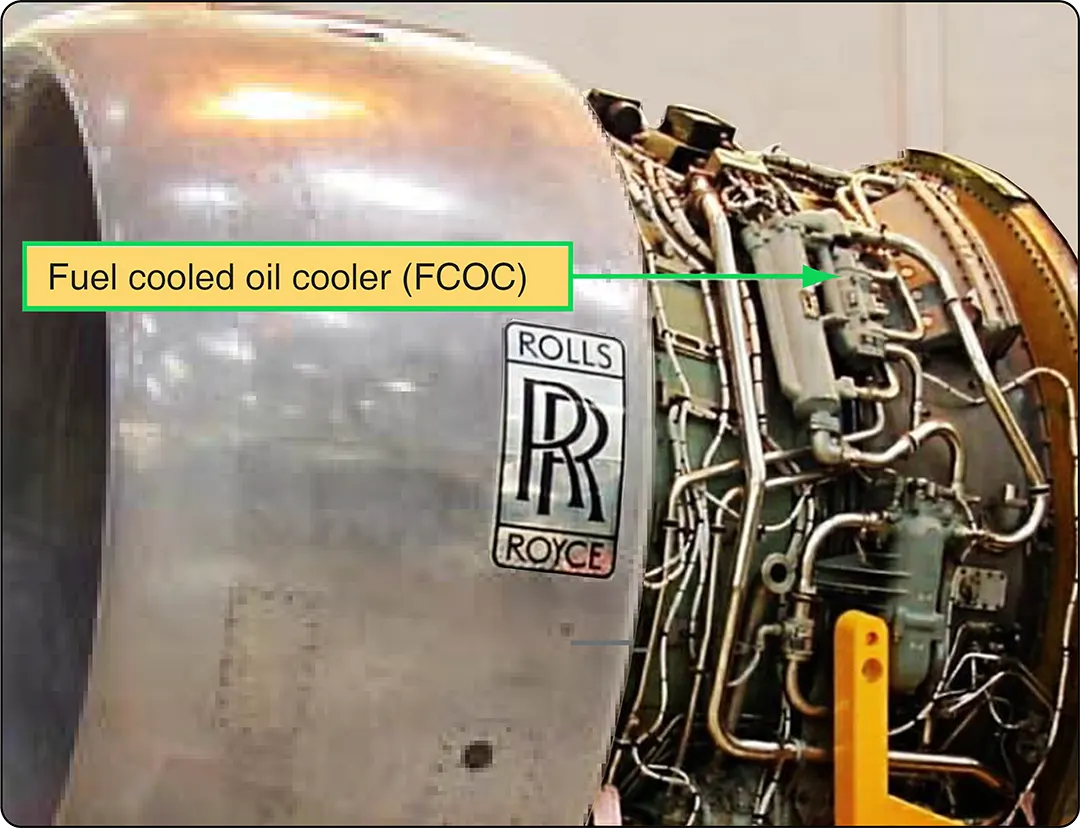
The most common types of fuel heaters are air-fuel heaters and oil/fuel heaters. An air-fuel heater uses warm engine compressor bleed air to heat the fuel. An oil/fuel heat exchanger uses hot engine oil to heat the fuel. This latter type is often referred to as a fuel-cooled oil cooler (FCOC). [Figure 1]
Fuel Heater Operation
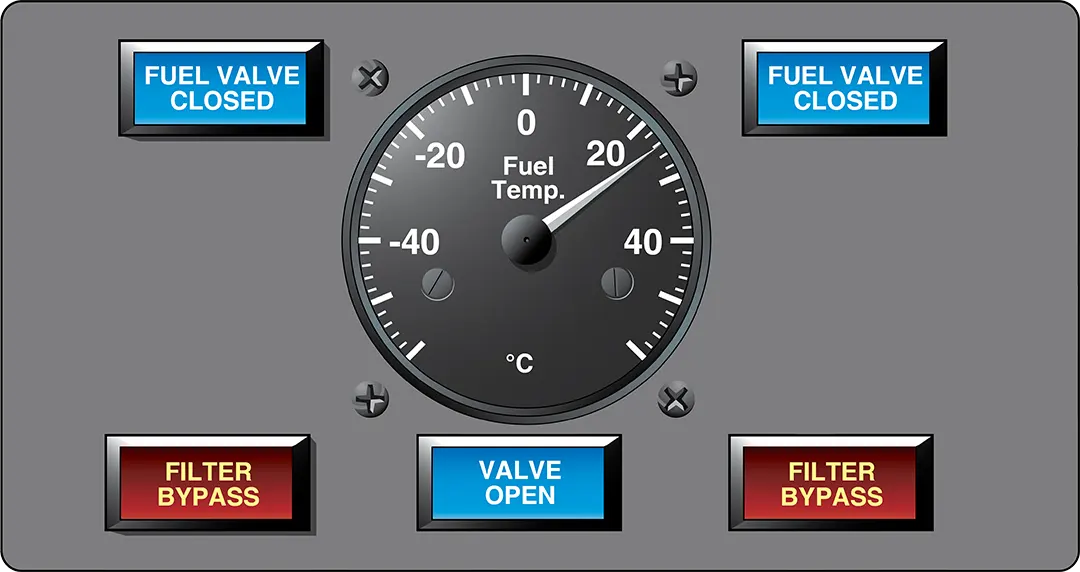
Fuel heaters often operate intermittently as needed. A switch in the flight deck can direct hot air or oil through the unit or block its flow. The flight crew uses information from the filter bypass indicator lights and fuel temperature gauge [Figure 2] to determine when fuel heating is required.
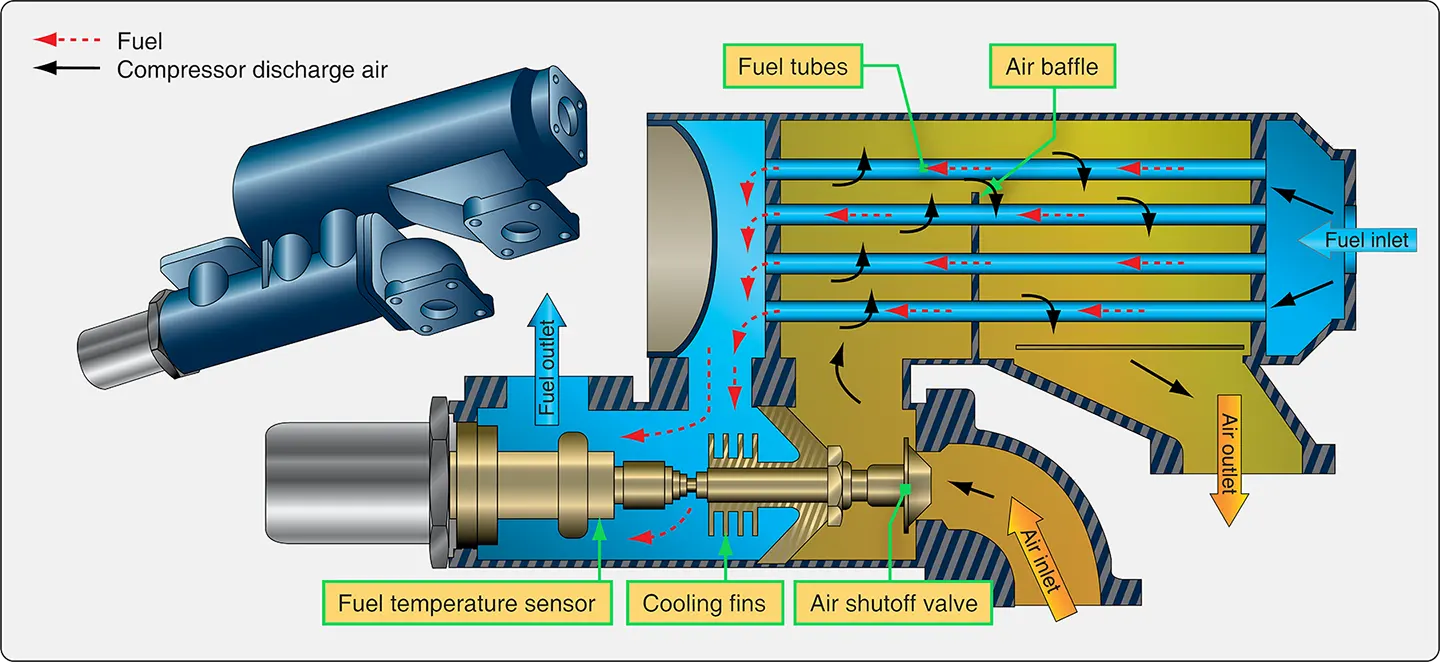
Fuel heaters can also operate automatically. A built-in thermostatic device opens or closes a valve that permits hot air or hot oil to flow through the unit and warm the fuel.
Figure 3 illustrates the arrangement of the fuel tubes and compressor discharge air passages. The hot compressor bleed air transfers heat to the fuel as it passes through the heat exchanger. A thermostatically controlled air shutoff valve regulates the flow of hot air through the unit.
Hydraulic Fluid Cooling and Fuel Heating
Some aircraft have a hydraulic fluid cooler installed in one of the aircraft fuel tanks. In this arrangement, heat from the hydraulic fluid is transferred to the surrounding fuel as the fluid cools in the heat exchanger. This heat transfer also helps warm the fuel and reduces the possibility of ice formation.