
Aircraft drawings and technical documents are essential for aircraft maintenance, inspection, and repair. These documents have traditionally been stored and accessed using methods such as microfilm and microfiche. With advances in technology, digital images and electronic storage have become important tools for managing and sharing aircraft technical information. Understanding these methods helps aviation maintenance technicians access technical data and document aircraft conditions effectively.
Microfilm and Microfiche
Microfilm and microfiche were widely used in the past to store aircraft drawings, parts catalogs, maintenance manuals, and overhaul instructions. Microfilm is a photographic film format commonly available in 16 mm and 35 mm sizes. The larger 35 mm film generally provides better reproduction quality and greater detail, particularly when recording large or complex drawings. Microfiche is a flat sheet of photographic film containing multiple reduced pages arranged in a grid.
Microfilm and microfiche require specialized equipment to view, enlarge, and reproduce the stored information. Although these methods have largely been replaced by digital storage and electronic technical publications, they may still be encountered when working with older aircraft and historical maintenance documentation. Some legacy technical information may only be available in these formats.
Digital Images in Aircraft Maintenance
Digital images captured using digital cameras or other imaging devices can be valuable tools for aviation maintenance technicians. They allow technicians to document, evaluate, and communicate information concerning aircraft condition, damage, defects, and maintenance activities. Digital images can be transmitted electronically to maintenance personnel, engineers, inspectors, or manufacturers for further evaluation.
Examples include photographs of structural fatigue cracks, damaged components, composite structure defects, corrosion, and other discrepancies. Digital images may also be used to document aircraft modifications, design features, and paint schemes. Figure 1 illustrates damage to a composite structure recorded using a digital camera.
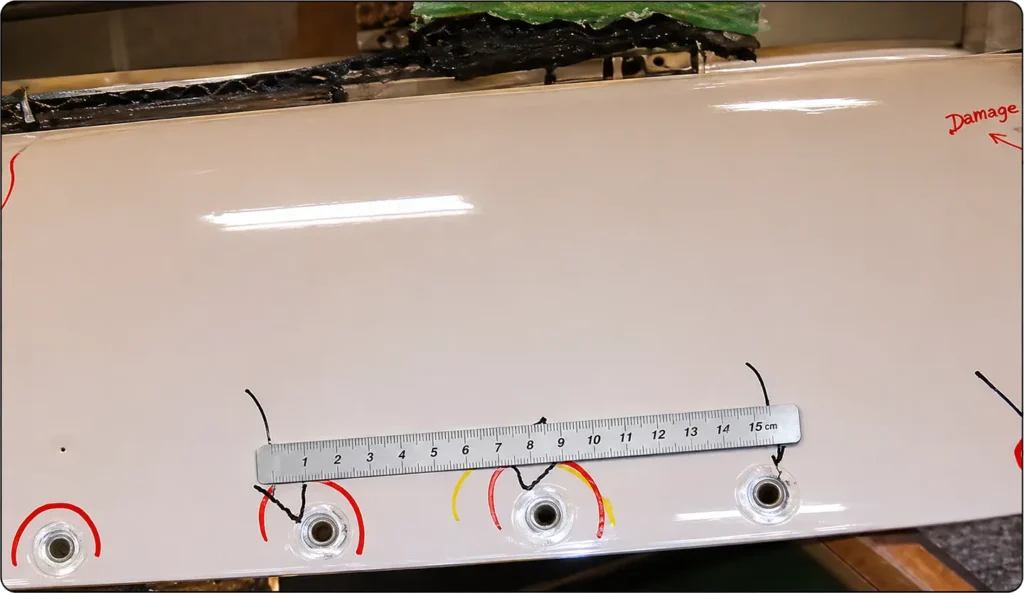
Documenting Aircraft Damage with Digital Images
To help communicate the extent of damage, a suitable measurement scale should be placed near the affected area before taking the photograph. A ruler or other reference object may be used when appropriate. The scale should be positioned in the same plane as the damage whenever possible to reduce measurement errors caused by perspective.
The accompanying documentation should identify the exact location of the damage using appropriate aircraft reference points, such as fuselage stations, wing stations, or other aircraft location identification systems. Additional photographs from different angles may be necessary to show the full extent of the damage.
Digital photographs support inspection and maintenance documentation; however, they do not replace required inspections, measurements, or approved repair procedures. Damage must be evaluated in accordance with the applicable aircraft maintenance documentation and approved repair data.