
Taxiing is the movement of an aircraft on the ground under its own engine power. It is an important part of aircraft ground operations and requires proper coordination between the pilot, air traffic control, and ground personnel.
Only appropriately qualified and authorized personnel should start, run up, and taxi aircraft. All taxiing operations must be performed in accordance with applicable regulations, airport procedures, and aircraft operating instructions.
Figure 1 shows the standard light signals used by control towers to communicate with aircraft when radio communication is unavailable or cannot be used.
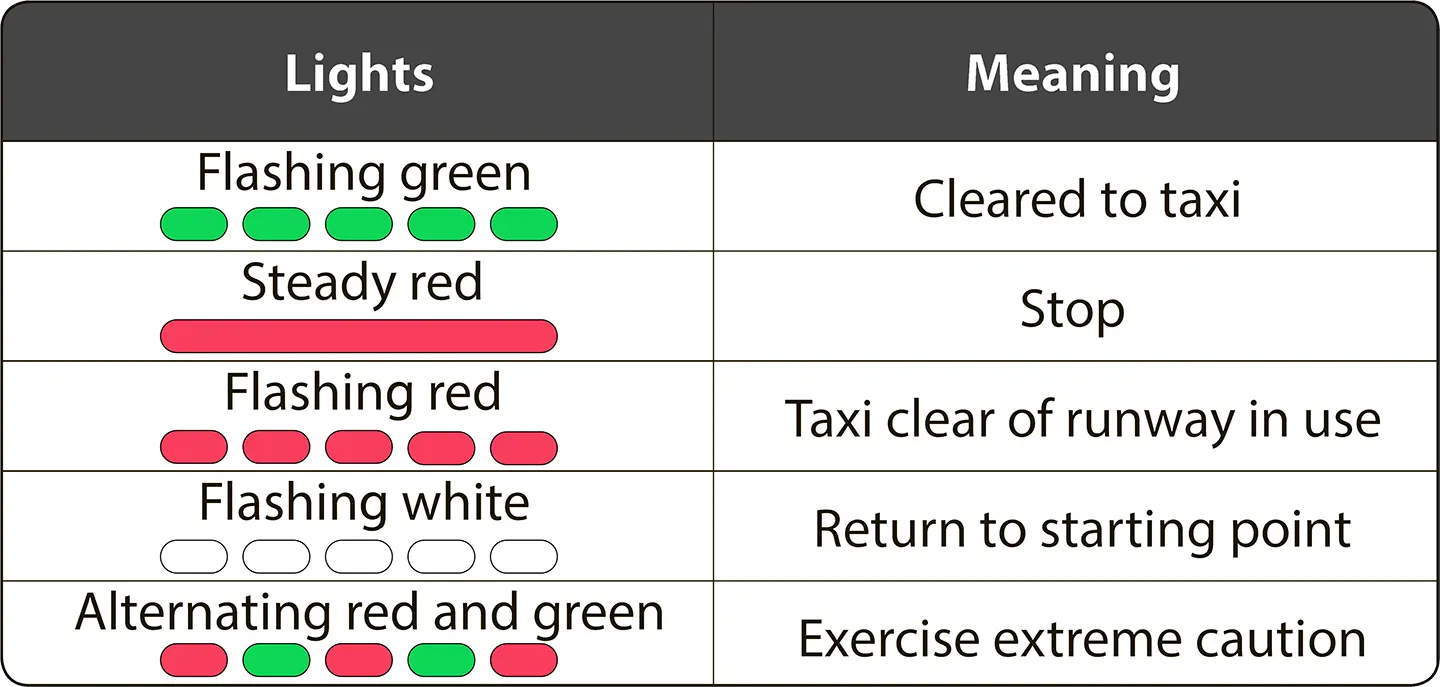
The following sections describe taxi signals and related instructions for guiding aircraft safely during ground operations.
Taxi Signals
Many ground accidents have occurred as a result of improper techniques during aircraft ground movement. Although the pilot is ultimately responsible for the aircraft during taxiing, a taxi signalman can assist the pilot in maneuvering around the flight line.
In some aircraft configurations, the pilot’s vision is obstructed while the aircraft is on the ground. The pilot may be unable to see obstructions close to the wheels or beneath the wings and may have limited visibility behind the aircraft. Consequently, the pilot depends on the taxi signalman for directions.
Figure 2 shows a taxi signalman indicating readiness to guide the aircraft by extending both arms fully above the head, with the palms facing each other.
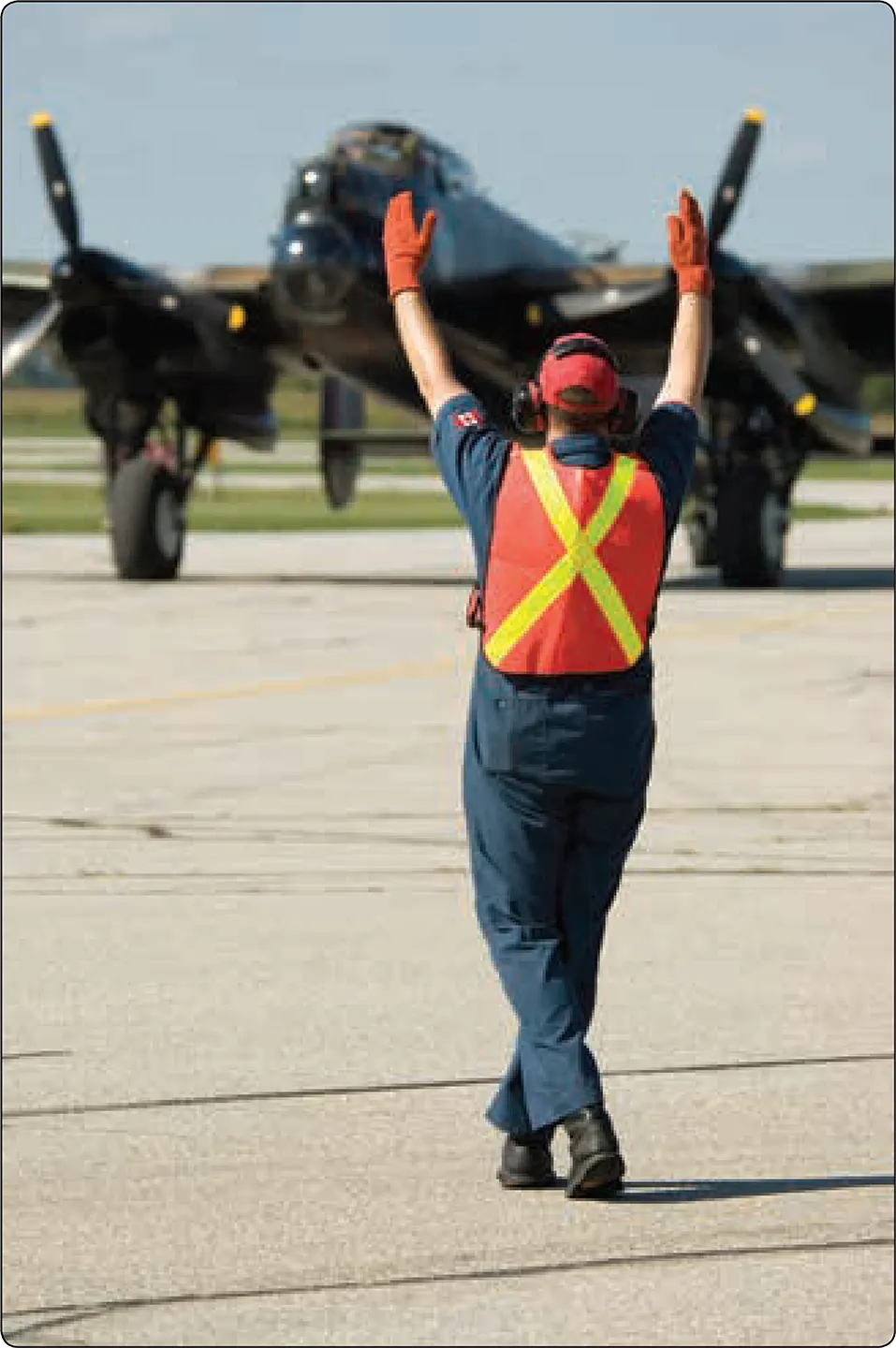
The standard position for a signalman is slightly ahead of and in line with the aircraft’s left wingtip. As the signalman faces the aircraft, the nose of the aircraft is on the signalman’s left. [Figure 3]
The signalman must remain far enough ahead of the wingtip to stay within the pilot’s field of vision. A useful visibility check is to ensure that the signalman can see the pilot’s eyes. If the signalman can see the pilot’s eyes, the pilot should be able to see the signals.
Figure 3 shows standard aircraft taxiing hand signals published in the Federal Aviation Administration (FAA) Aeronautical Information Manual (AIM).
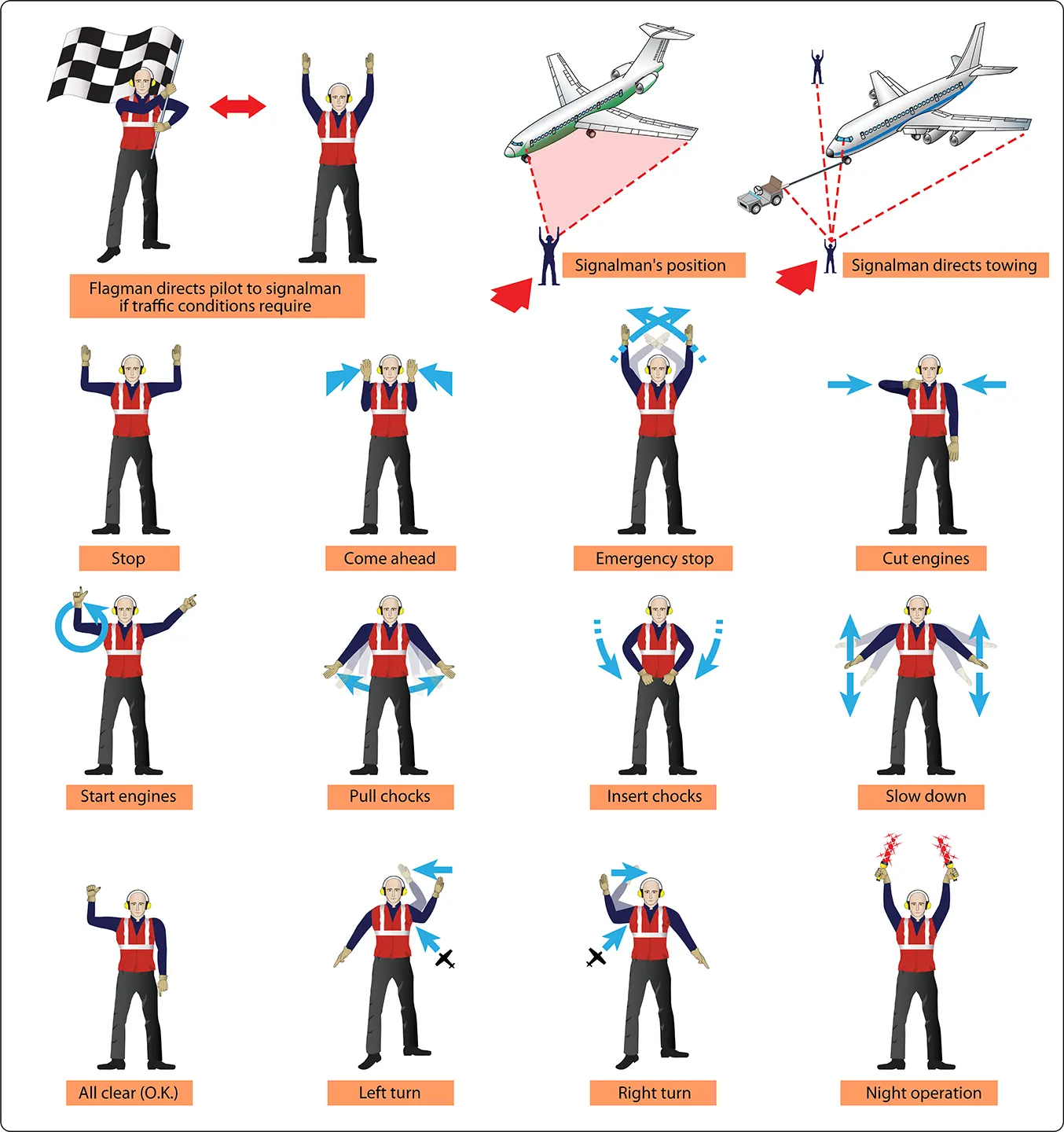
Other standard signals are published by the FAA in Advisory Circular AC 00-34 and by the International Civil Aviation Organization (ICAO) in Annex 2, Appendix 1. The Armed Forces also use established signals. Furthermore, operating conditions in different locations may require a modified set of taxi signals.
The signals shown in Figure 3 represent a minimum number of commonly used signals. Whether this set or a modified set is used, the important consideration is that each flight operations center uses a suitable, agreed-upon set of signals that is understood by the personnel involved.
Figure 4 illustrates some commonly used helicopter operating signals.
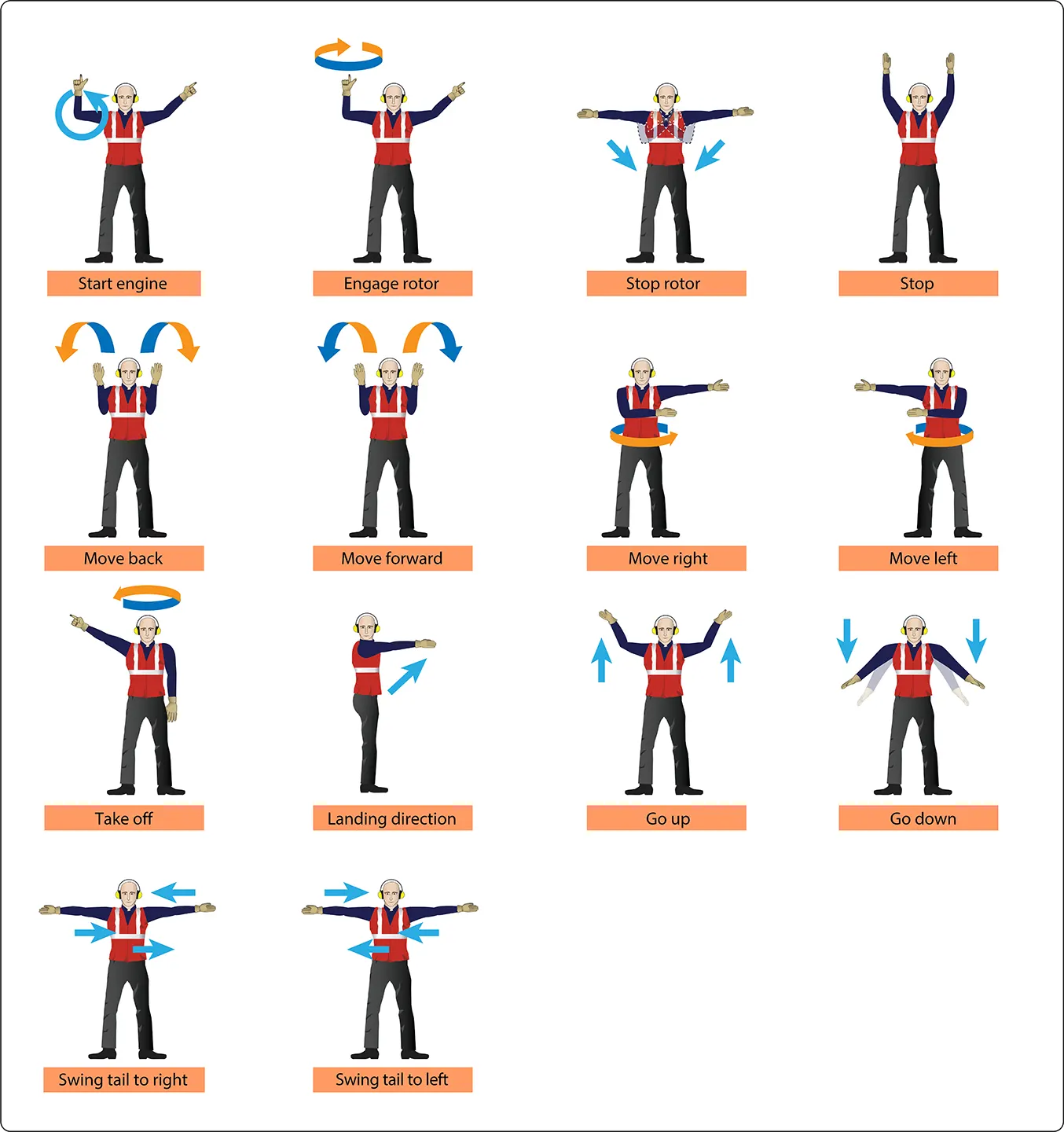
The taxi signals must be studied until the signalman can execute them clearly and precisely. Signals must be given in a manner that prevents the pilot from confusing their meaning.
Remember that the pilot receiving the signals is usually some distance away and may be looking outward and downward from a difficult angle. Therefore, the signalman’s hands must be kept well separated, and signals should be exaggerated rather than risk being indistinct.
If there is any doubt about a signal, or if the pilot does not appear to be following the signals, give the stop signal and begin the sequence of signals again after the situation has been clarified.
The signalman should always try to indicate the approximate area where the aircraft is to be parked. When walking backward, the signalman must frequently look behind to avoid walking into a propeller or tripping over a chock, fire extinguisher, tie-down line, or other obstruction.
Night Taxi Signals
Taxi signals are usually given at night with the aid of illuminated wands attached to flashlights. [Figure 5]
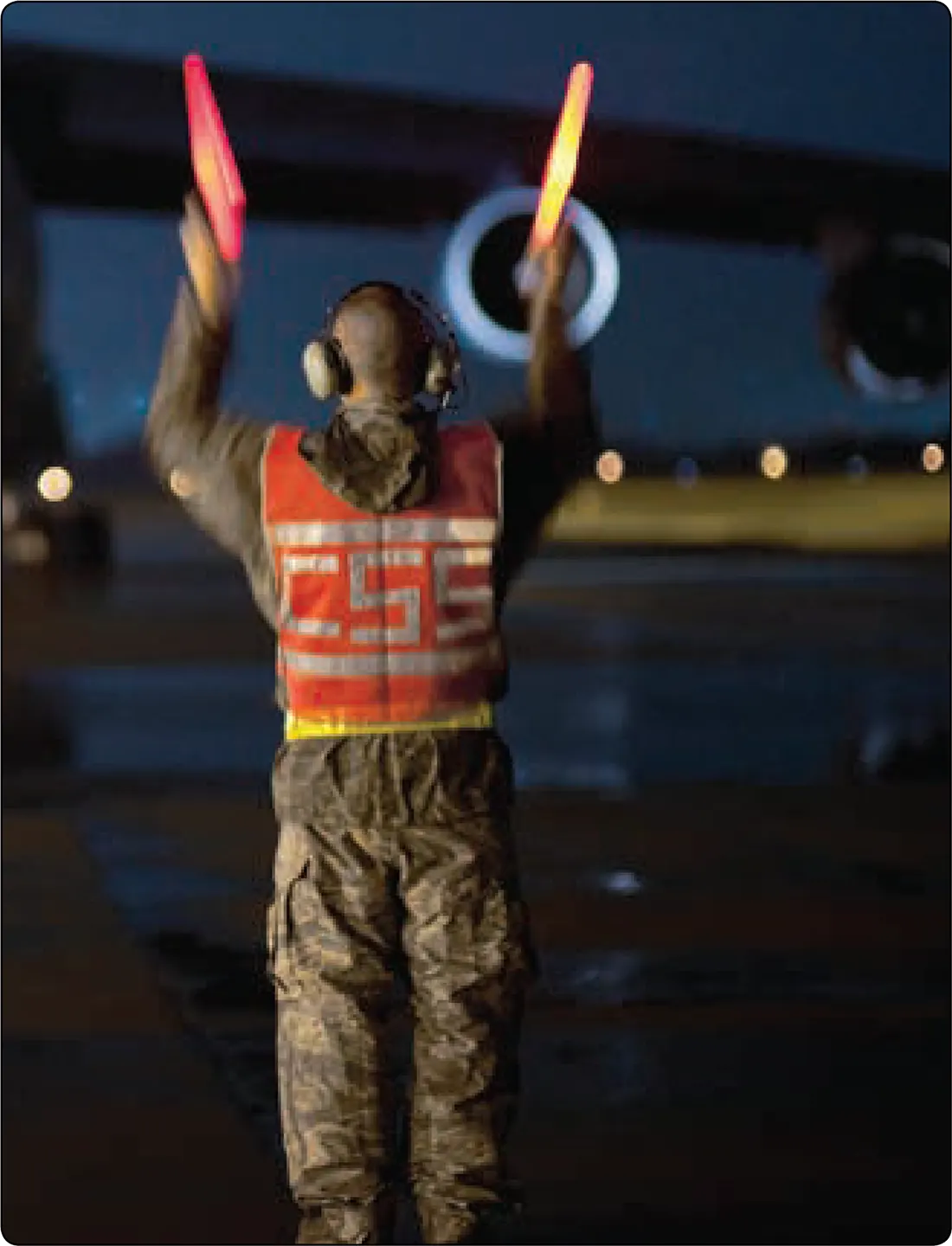
Night signals are made in the same manner as daytime signals, except for the stop signal. The stop signal used at night is the emergency stop signal. This signal is made by crossing the illuminated wands to form a lighted X above and in front of the head.