
Aircraft must be properly secured when parked to prevent damage from wind, storms, and other environmental conditions. Tie-down procedures vary depending on the type of aircraft, its size, landing gear configuration, and the expected weather conditions. Proper securing methods help protect the aircraft from movement, structural damage, and damage to its control surfaces and other components.
Table of Contents
Table of Contents
Preparation of Aircraft
Aircraft should be tied down after each flight to prevent damage from sudden storms. The direction in which aircraft are parked and tied down is determined by the prevailing or forecast wind direction.
Aircraft should be headed into the wind whenever possible, depending on the locations of the fixed tie-down points in the parking area. Adequate spacing must be maintained between parked aircraft to provide sufficient wingtip clearance. [Figure 1]
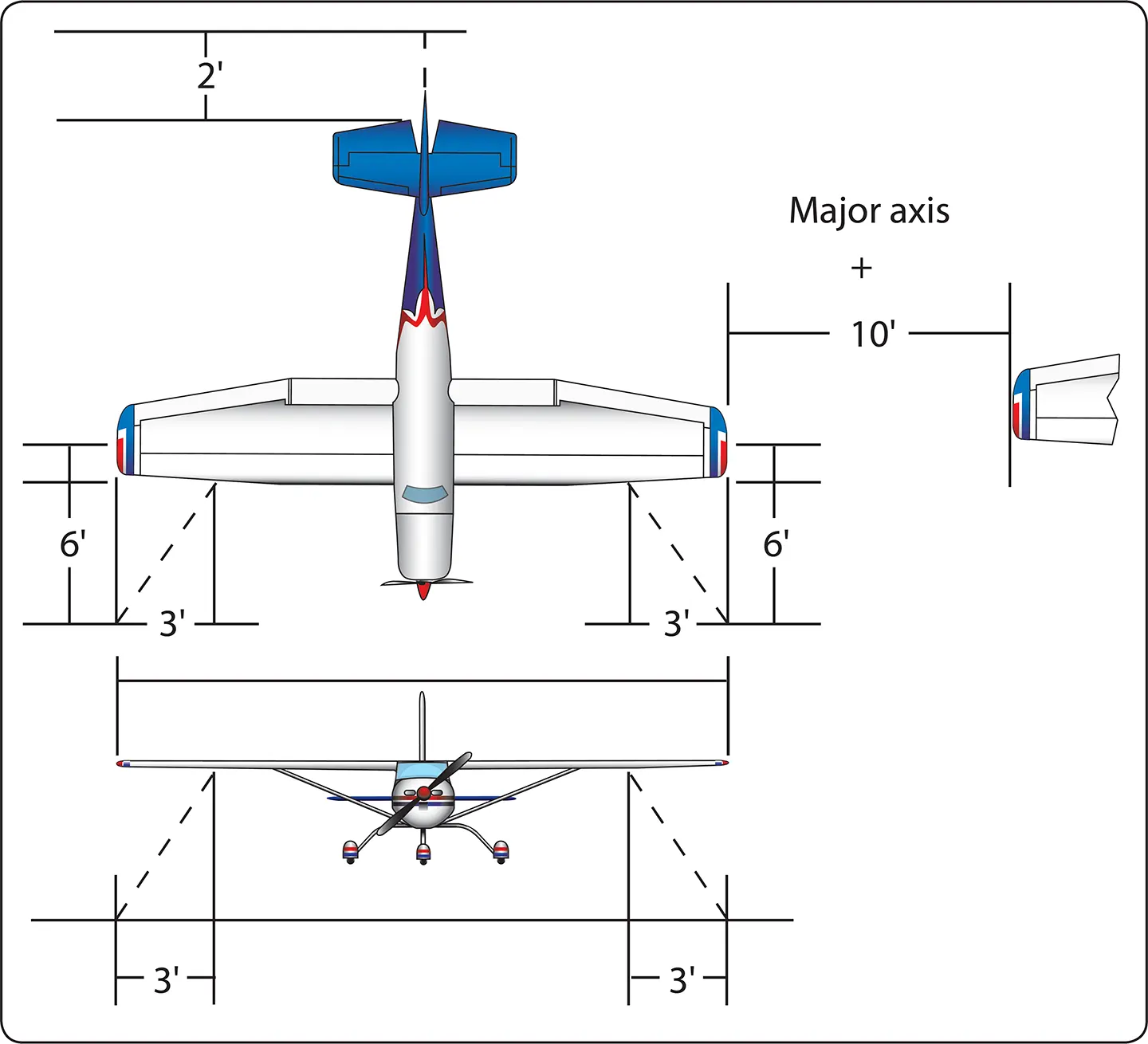
After the aircraft is properly positioned, lock the nosewheel or tailwheel in the fore-and-aft position, as applicable.
Tie-Down Procedures for Land Planes
Securing Light Aircraft
Light aircraft are most often secured with ropes attached only to the aircraft tie-down rings provided for this purpose. A rope should never be tied to a lift strut because it can bend the strut if the rope slips to a point where there is no slack.
Since manila rope shrinks when wet, approximately 1 inch (1″) of slack should be provided to allow for movement. However, too much slack allows the aircraft to jerk against the ropes. Tight tie-down ropes can impose loads similar to those experienced during inverted flight, and many aircraft are not designed to withstand such loads.
A tie-down rope holds no better than the knot used to secure it. Non-slip knots, such as the bowline, are quick to tie and easy to untie. [Figure 2]
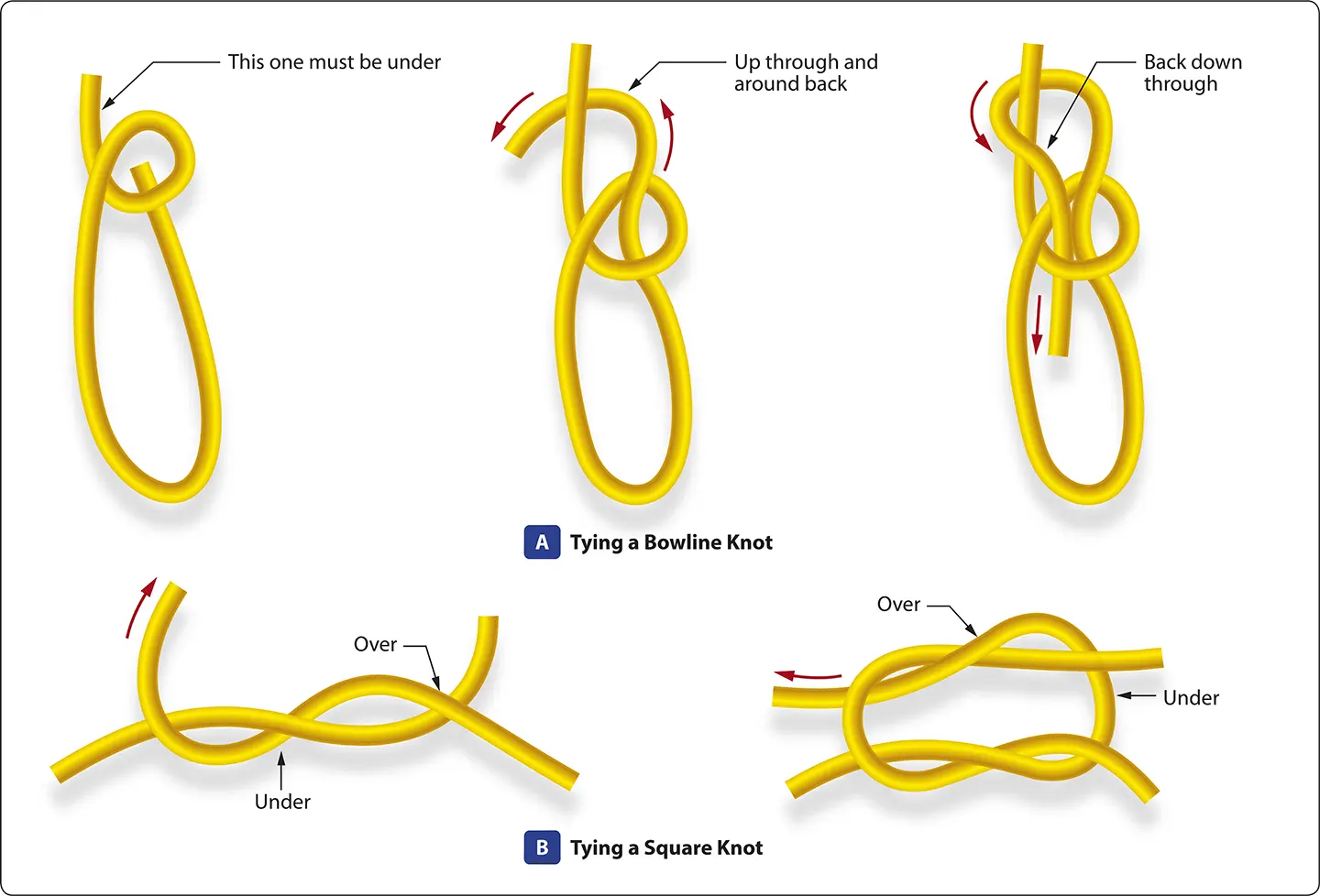
Aircraft not equipped with tie-down fittings must be secured in accordance with the manufacturer’s instructions. If the manufacturer has not provided tie-down fittings, ropes may be attached to the outer ends of struts on high-wing monoplanes, provided that the structural conditions permit. Suitable rings should be provided where appropriate.
Securing Heavy Aircraft
The normal tie-down procedure for heavy aircraft can be accomplished using rope or cable tie-downs. The number of tie-downs required depends on the anticipated weather conditions.
Most heavy aircraft are equipped with control locks that are engaged or installed when the aircraft is secured. Since the method of locking the controls varies among aircraft types, consult the manufacturer’s instructions for the correct installation or engagement procedures.
If high winds are anticipated, control surface battens can also be installed to prevent damage. Figure 3 illustrates four common tie-down points on heavy aircraft.
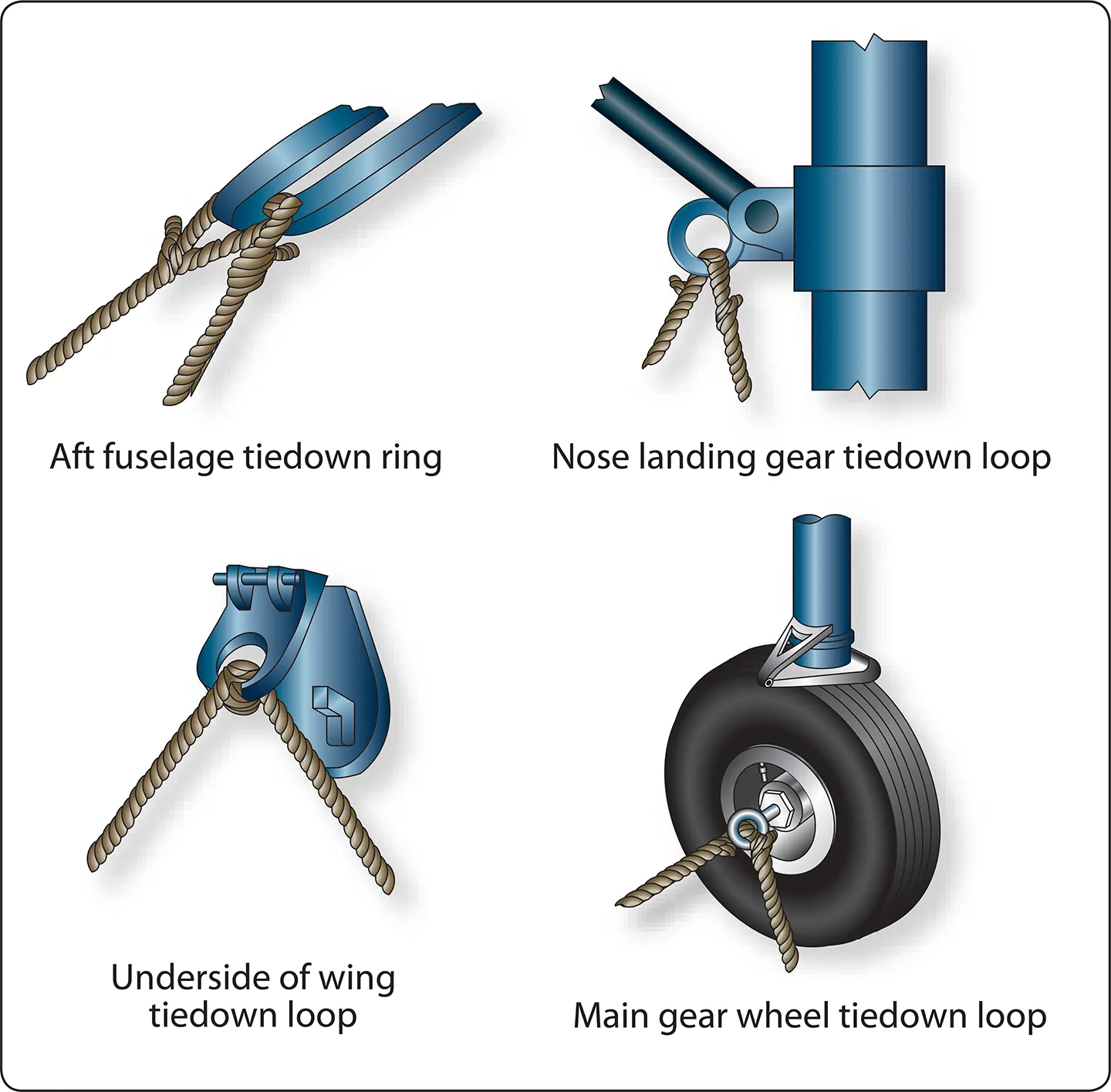
The normal tie-down procedure for heavy aircraft includes the following:
- Head the aircraft into the prevailing wind whenever possible.
- Install control locks, covers, and guards.
- Chock all wheels fore and aft. [Figure 4]
- Attach tie-down reels to the aircraft tie-down loops, tie-down anchors, or tie-down stakes. Use tie-down stakes for temporary tie-down only. If tie-down reels are not available, 1/4-inch wire cable or 1 1/2-inch manila line may be used.
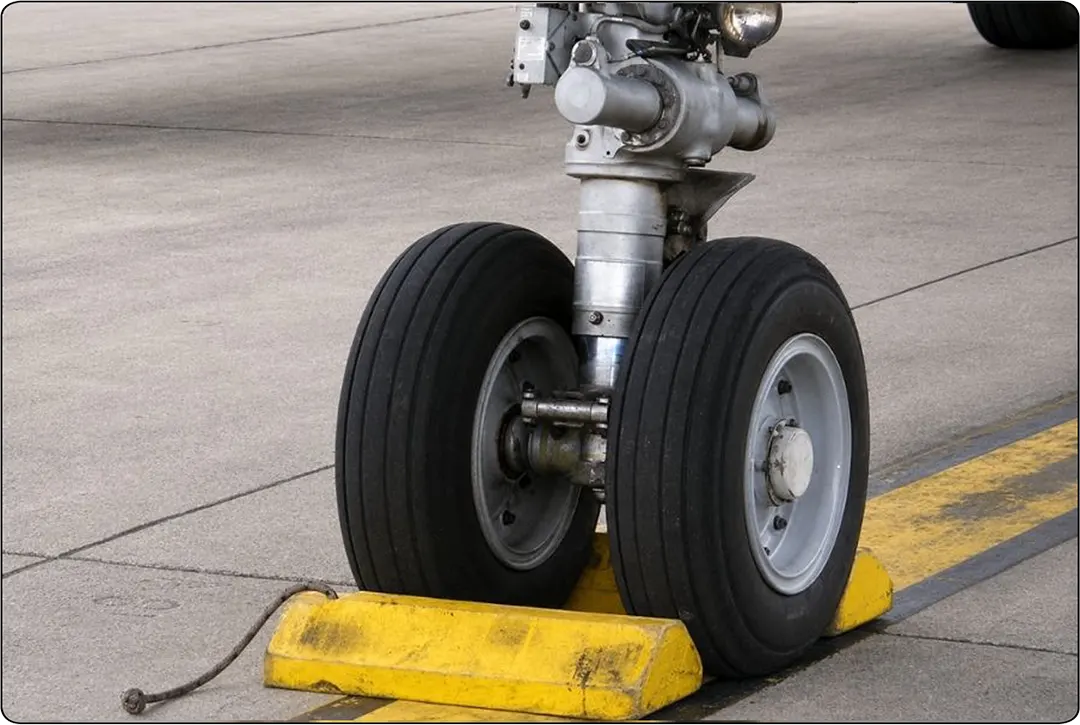
Tie-Down Procedures for Seaplanes
Seaplanes can be moored to a buoy, weather permitting, or tied to a dock. Weather conditions can cause wave action, and waves cause the seaplane to bob and roll. This movement while the aircraft is tied to a dock can cause damage.
When a warning of an approaching storm is received and it is not possible to fly the aircraft out of the storm area, the aircraft must be secured using an appropriate mooring arrangement. The original guidance describes partially flooding some compartments to reduce the aircraft’s exposure to wind and securing it to anchors.
Seaplanes tied down on land have also been protected from high-wind damage by filling their floats with water in addition to using the usual tie-down procedures.
During severe weather, the seaplane should be removed from the water, if possible, and tied down in the same manner as a land plane. If this is not possible, it may be anchored in a sheltered area away from the wind and waves.
Tie-Down Procedures for Ski Planes
Ski planes should be tied down in the same manner as land planes when suitable securing facilities are available.
Ski-equipped airplanes can also be secured on ice or in snow using a device called a dead-man. A dead-man is an item available at the location, such as a piece of pipe or a log, to which a rope is attached. The item is buried in a trench in the snow or ice.
The free end of the rope must be kept dry and unfrozen. Snow is then packed into the trench. If available, water can be poured into the trench and allowed to freeze. Once frozen, the aircraft can be tied down using the free end of the rope.
Operators of ski-equipped aircraft sometimes pack soft snow around the skis, pour water over the snow, and allow the skis to freeze to the ice. This method, used in addition to normal tie-down procedures, helps prevent damage from windstorms.
Caution must be exercised when moving an aircraft secured in this manner. Ensure that the skis are no longer frozen to the ground before attempting to move the aircraft. Otherwise, damage to the aircraft or skis may occur.
Tie-Down Procedures for Helicopters
Helicopters, like other aircraft, must be secured to prevent structural damage caused by high-velocity surface winds. Whenever possible, helicopters should be secured inside hangars. If this is not possible, they must be tied down securely.
The original handbook guidance states that properly tied-down helicopters can usually withstand winds of approximately 65 mph. If tornadoes or hurricanes are anticipated, helicopters should be evacuated to a safe area whenever possible. For additional protection, helicopters can be moved to a clear area where they are less likely to be damaged by flying objects or falling tree limbs.
If high winds are anticipated while the helicopter is parked outdoors, the main rotor blades should be secured. Detailed instructions for securing and mooring each helicopter type are provided in the applicable maintenance manual. [Figure 5]
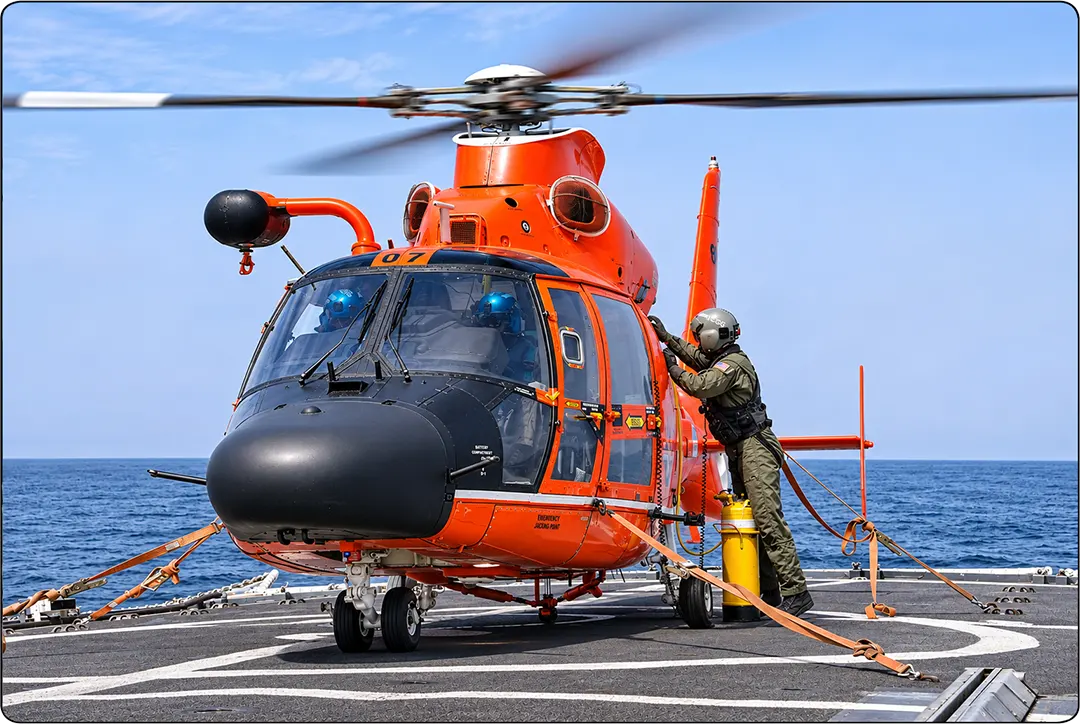
Methods of securing helicopters vary according to weather conditions, the length of time the aircraft is expected to remain on the ground, and the location and characteristics of the aircraft.
Wheel chocks, control locks, rope tie-downs, mooring covers, tip socks, tie-down assemblies, parking brakes, and rotor brakes are used to secure helicopters.
Typical mooring procedures are as follows:
- Face the helicopter in the direction from which the highest forecast wind or gusts are anticipated.
- Position the helicopter slightly more than one rotor-span distance from other aircraft.
- Place wheel chocks ahead of and behind all wheels, where applicable. On helicopters equipped with skids, retract the ground-handling wheels, lower the helicopter to rest on the skids, and install wheel-position lock pins or remove the ground-handling wheels. Secure the ground-handling wheels inside the aircraft, hangar, or storage building. Do not leave them unsecured on the flight line.
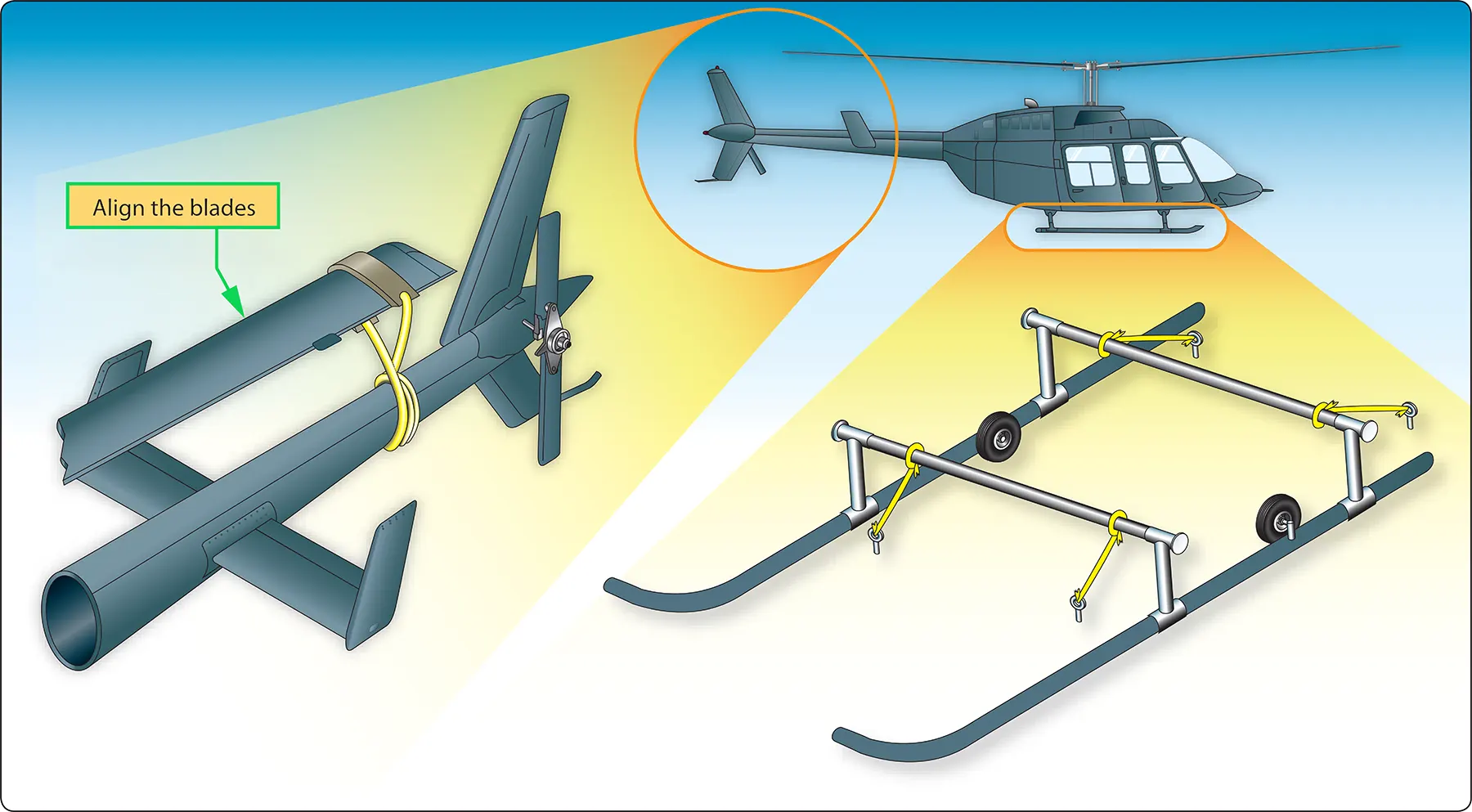
- Align the blades and install tie-down assemblies as prescribed by the helicopter manufacturer. [Figure 6] Tie the straps snugly without strain. During wet weather, provide some slack to prevent the straps from shrinking and placing undue stress on the aircraft or its rotor system.
- Fasten the tie-down ropes or cables to the forward and aft landing-gear cross tubes and secure them to ground stakes or tie-down rings.
Procedures for Securing Weight-Shift-Control
There are many types of weight-shift-controlled aircraft, including engine-powered and non-powered aircraft. These aircraft are particularly susceptible to wind damage.
In light winds, the wings can be secured in a manner similar to that used for conventional aircraft. In high winds, the mast can be disconnected from the wing, and the wing can be placed close to the ground and secured.
This type of aircraft can also be partially disassembled or moved into a hangar for protection.
Procedures for Securing Powered Parachutes
When securing powered parachutes, pack the parachute into a bag to prevent the chute from filling with air in windy conditions and dragging the seat and engine.
The engine and seat can also be secured if necessary.