
Keeping aircraft maintenance shops, hangars, and flight lines clean and organized is essential for maintaining a safe working environment and ensuring efficient aircraft maintenance. Technicians must follow established safety practices, maintain good housekeeping, use appropriate protective equipment, and remain aware of potential hazards when working with electrical equipment, compressed gases, hazardous materials, and machine tools.
Table of Contents
Table of Contents
General Shop Safety
The highest standards of housekeeping and orderly work arrangements must be maintained during aircraft maintenance. Where continuous work shifts are established, the outgoing shift must remove and properly store personal tools, rollaway toolboxes, work stands, maintenance stands, hoses, electrical cords, hoists, crates, and boxes used during the work.
Signs must be posted to identify dangerous equipment and hazardous conditions. Additional signs should indicate the locations of first-aid supplies and fire-protection equipment. Safety lanes, pedestrian walkways, and fire lanes are marked around the interior perimeter of hangars. These measures help prevent accidents and keep pedestrian traffic away from active work areas.
Safety is everyone’s responsibility. Technicians and supervisors must remain alert to their own safety and the safety of others working nearby. Effective communication is essential to maintaining a safe working environment. If personnel observe unsafe practices, they should communicate the hazard to those involved and remind them of the potential risks to themselves and others.
Electrical Safety
Physiological Effects of Electricity
Working with electrical equipment presents several physiological hazards. When electric current passes through the human body, it can cause severe burns at the points where the current enters and exits. It can also affect the nervous system, potentially causing serious injury or damage.
To work safely with electricity, technicians must understand the basic principles of electricity and maintain an appropriate respect for its potential to perform useful work as well as cause serious harm.
Using appropriate personal protective equipment (PPE) can help protect technicians from electrical hazards. Depending on the task and electrical hazards involved, protective equipment may include properly rated insulating gloves, safety glasses, and suitable insulating mats. Such equipment must be selected and used in accordance with the applicable electrical safety procedures.
Two factors that can affect safety when working with electricity are fear and overconfidence. Both extremes can contribute to accidents. A healthy respect for electrical equipment and a reasonable level of confidence in one’s knowledge and abilities are important, but neither should replace proper training and safe working practices.
Lack of respect for electrical hazards is often associated with a lack of knowledge. Personnel who attempt to work with electrical equipment without understanding its basic principles may lack the skills needed to work safely. Overconfidence can also lead to unnecessary risk-taking. Technicians must understand the hazards and capabilities of electricity and follow established safety procedures.
Electrical Fire Safety
Whenever electric current flows through a conductor, some electrical energy is converted into heat. The amount of heat produced depends on factors such as the current and the resistance of the conductor.
Excessive heat can damage the protective insulation on wires and other electrical components. Damaged insulation may expose conductors and lead to short circuits, which can result in further heating, equipment damage, or fire. If temperatures become sufficiently high, nearby metals may melt, liquids may vaporize, and flammable materials may ignite.
To help prevent electrical fires, keep areas around electrical work and equipment clean, uncluttered, and free of unnecessary flammable materials.
Ensure that power cords, wires, and electrical lines are properly routed and protected from damage. Avoid sharp bends, kinks, and locations where cords may be walked on or run over by equipment.
When individual strands within a flexible conductor are broken, the reduced conductor cross-section can increase electrical resistance and localized heating. This may cause the insulation to deteriorate and create a fire hazard.
Regularly inspect electrical equipment and its wiring. Damaged equipment must be repaired or replaced before further use.
Safety Around Compressed Gases
Compressed air and other compressed gases are useful tools when handled properly. However, they can cause serious injuries if the equipment is damaged, incorrectly operated, or improperly maintained. A typical nitrogen bottle set is shown in Figure 1.
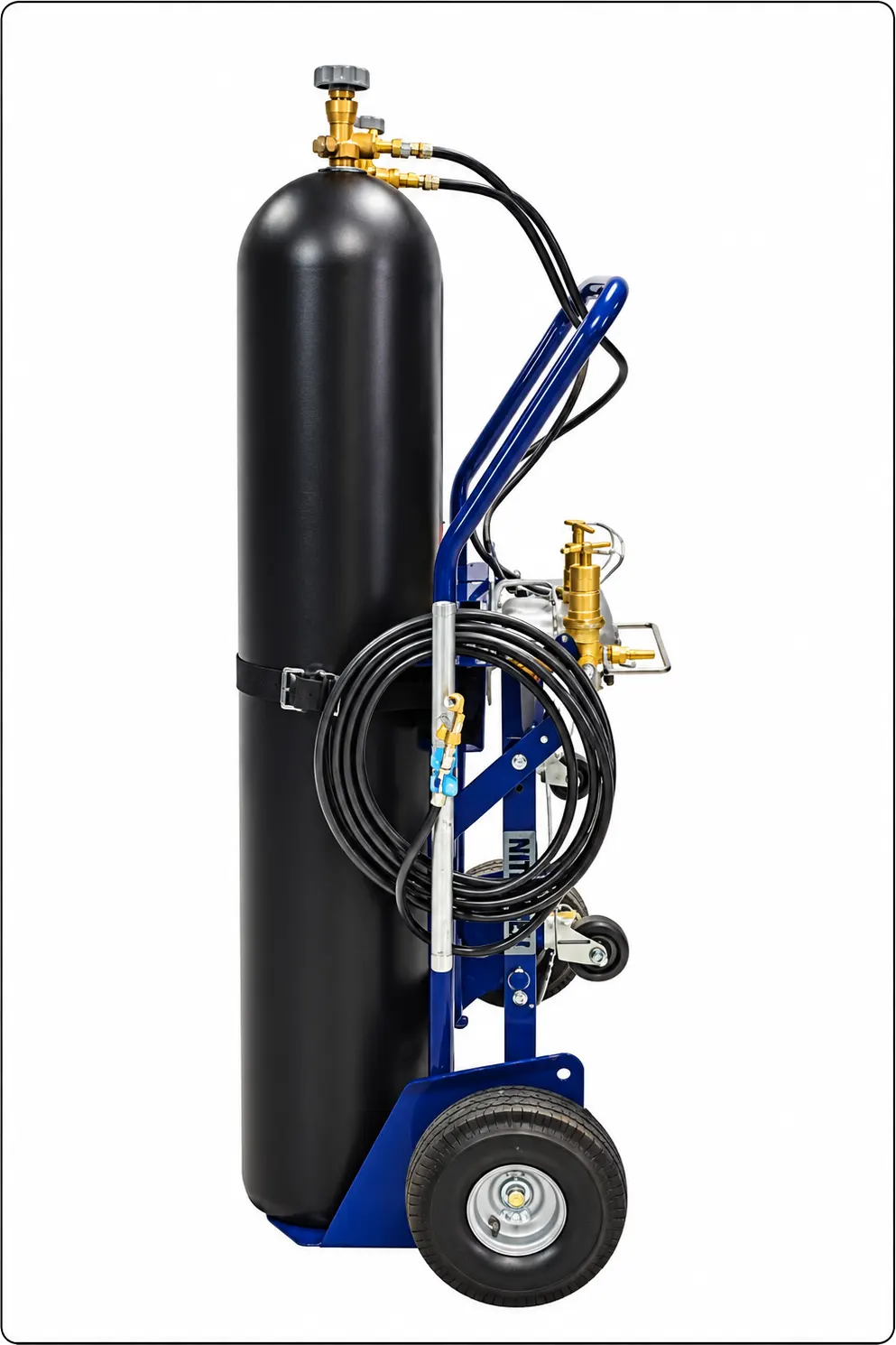
The following precautions apply when working with or around compressed gases:
- Inspect air hoses frequently for breaks, cracks, and worn spots. Replace unsafe hoses immediately.
- Keep all connections in a leak-free condition.
- Maintain in-line oilers, if installed, in proper operating condition.
- Ensure that water sumps are installed in the system and drained at regular intervals.
- Filter air used for paint spraying to remove oil and water.
- Never use compressed air to clean hands or clothing. High-pressure air can force debris into the skin, causing serious injury or infection.
- Never direct compressed air toward other personnel.
- Straighten, coil, and properly store air hoses when they are not in use.
- Many accidents involving compressed gases occur during aircraft tire mounting. To prevent personal injury, use tire dollies and other appropriate devices when mounting or removing heavy aircraft tires.
When inflating tires on aircraft wheels, always use appropriate tire-cage guards. Extreme caution is necessary to prevent overinflation of high-pressure tires, which can cause serious personal injury. Use pressure regulators on high-pressure air bottles to prevent excessive tire pressure.
Tire cages are not required when adjusting the pressure of tires installed on an aircraft. Nevertheless, the applicable aircraft maintenance instructions and approved servicing procedures must always be followed.
Safety Around Hazardous Materials
Hazardous-material identification labels are important for shop safety. Diamond-shaped hazard labels provide a quick visual indication of the hazards associated with a material in a container. When used with the appropriate safety information, they help personnel identify the precautions and protective equipment required when handling the material.
One commonly used hazard-identification system is the NFPA 704 hazard diamond. It consists of four colored sections representing different types of hazards:
- Red: Flammability
- Yellow: Instability (reactivity)
- Blue: Health hazard
- White: Special hazards
The blue, red, and yellow sections contain numerical ratings from 0 to 4. A rating of 0 represents a minimal hazard, while a rating of 4 represents a severe hazard. The white section contains symbols or abbreviations identifying specific hazards. For example, a W with a line through it indicates that the material reacts dangerously with water. [Figure 2]
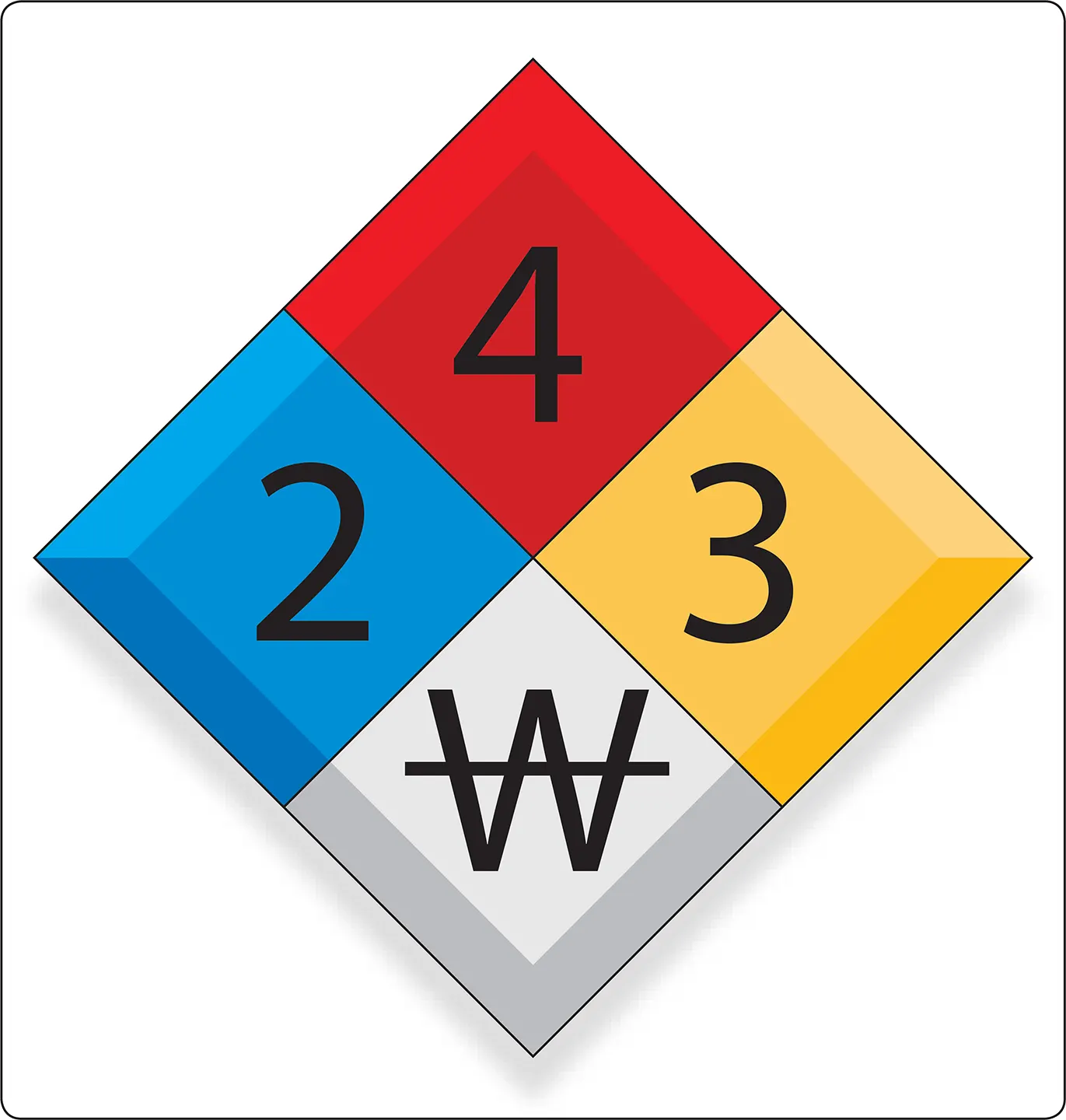
The symbols and abbreviations used in the special-hazard section should be interpreted according to the applicable labeling system rather than assumed to have universal meanings.
Safety Data Sheets (SDSs), formerly known as Material Safety Data Sheets (MSDSs), provide more detailed information about hazardous materials. An SDS contains information about the chemical composition, physical and health hazards, safe handling and storage, personal protective equipment, and emergency procedures to follow in the event of exposure.
SDSs follow a standardized 16-section format, although the information within each section may vary according to the chemical and its manufacturer or supplier. Personnel must be familiar with the SDS information for the materials they use.
The NFPA 704 hazard diamond is a separate hazard-identification system; it is not the SDS itself. An NFPA rating may be included as supplementary information on a chemical label or SDS, but it does not replace the required hazard information.
These documents and labeling systems are important for maintaining a safe workshop and supporting compliance with applicable workplace safety requirements, including those established by the U.S. Department of Labor’s Occupational Safety and Health Administration (OSHA).
Safety Around Machine Tools
Shop hazards increase when operating lathes, drill presses, grinders, milling machines, and other types of machine tools. Each machine has its own operating hazards and safety requirements. The following precautions help reduce the risk of injury.
Drill Press Safety
A drill press can be used to bore and ream holes and perform facing, milling, and other similar operations. The following precautions can reduce the chance of injury:
- Wear appropriate eye protection.
- Securely clamp all workpieces.
- Set the proper revolutions per minute (RPM) for the material and cutting tool being used.
- Do not allow the spindle to feed beyond its designed limit of travel while drilling.
- Stop the machine before adjusting the workpiece or attempting to remove jammed material.
- Clean the work area when finished.
Lathe Safety
Lathes are used to perform turning operations on cylindrical workpieces. These operations may be performed on the inside or outside surfaces of a cylinder. The workpiece is secured in a chuck to provide rotary motion, while the material is shaped by contact with a securely mounted cutting tool.
The following precautions can reduce the chance of injury:
- Wear appropriate eye protection.
- Use sharp cutting tools.
- Allow the chuck to stop on its own. Never attempt to stop it by applying hand pressure.
- Examine tools and workpieces for cracks or defects before starting the operation.
- Do not place tools on the lathe. They may be caught by the rotating workpiece and thrown.
- Allow the workpiece to stop completely before taking measurements.
Milling Machine Safety
Milling machines are used to shape or dress materials and to cut gear teeth, slots, keyways, and similar features.
The following precautions can reduce the chance of injury:
- Wear appropriate eye protection.
- Clean the worktable before starting work.
- Secure the workpiece to the table to prevent movement during milling.
- Select the proper cutting tools for the job.
- Do not change the feed speed while the cutting operation is in progress.
- Lower the table before moving the workpiece or making adjustments, as appropriate for the machine.
- Ensure that all clamps and bolts are properly positioned and have adequate clearance from the arbor and other moving parts.
Grinder Safety
Grinders are used to sharpen tools, dress metal, and perform other operations involving the removal of small amounts of material.
The following precautions can reduce the chance of injury:
- Wear appropriate eye protection, even when the grinder is equipped with a protective shield.
- Inspect the grinding wheel for cracks, damage, or other defects before use.
- Do not force a grinding wheel onto the spindle. The wheel must fit properly without being forced into position. Applying improper side pressure to a wheel can cause it to break.
- Check the grinding wheel flanges and compression washers to ensure that they are suitable for the wheel and correctly installed.
- Do not stand directly in the plane of rotation of the grinding wheel while starting or operating the grinder, as a wheel failure could cause serious injury.
Grinding machines must also have the required protective guards and properly adjusted work rests. The wheel’s rated maximum operating speed must be compatible with the grinder speed. Follow the applicable machine instructions and safety requirements.
Welding Safety
Welding must be performed only in designated areas. Whenever possible, any part requiring welding should be removed from the aircraft. The repair can then be completed in a controlled environment, such as a welding shop.
A welding shop must be equipped with suitable worktables, ventilation, tool storage, and fire-prevention and fire-extinguishing equipment.
Whenever possible, welding on an aircraft should be performed outside. If welding in a hangar is necessary, the following precautions should be observed:
- Open fuel tanks and work on fuel systems must not be permitted during welding operations.
- Painting operations must not be conducted in the welding area.
- The aircraft must be kept at least 35 feet from the welding operation, in accordance with the aircraft maintenance safety guidance.
- Flammable materials must be removed from the area or adequately protected against sparks, heat, and other ignition sources.
- Only qualified welders are permitted to perform the work.
- The welding area must be roped off and clearly identified with warning signs.
- Fire-extinguishing equipment with a minimum rating of 20B must be immediately available, with 80B-rated equipment provided as backup, as specified in the referenced aircraft maintenance guidance.
- Trained fire watches must be present when required by the conditions of the welding operation.
- The aircraft being welded must be in a towable condition, with a tug attached and the aircraft parking brakes released. A qualified operator must be on the tug, with mechanics available to assist in towing the aircraft if necessary. If the aircraft is inside the hangar, the hangar doors must be open.
All welding operations must also comply with applicable hot-work procedures, fire-prevention requirements, aircraft manufacturer instructions, and local facility safety rules.