
Aircraft servicing is an important part of aircraft maintenance and ground operations. It includes checking and replenishing engine oil, hydraulic fluid, fuel, and other fluids, as well as servicing aircraft with electrical power, hydraulic power, compressed air, and oxygen.
Before servicing any aircraft, consult the applicable aircraft maintenance manual to determine the correct servicing equipment, fluids, and procedures. Proper servicing practices help prevent contamination, equipment damage, and hazards to maintenance personnel.
Air, Nitrogen, Oil, and Fluids
Checking and servicing aircraft fluids are important maintenance functions. Before servicing any aircraft, consult the specific aircraft maintenance manual to determine the proper type of servicing equipment and procedures.
In general, aircraft engine oil is checked using a dipstick or sight gauge. Markings on the dipstick or around the sight gauge indicate the correct oil level.
Reciprocating engines are generally checked after the engine has been inactive for the period specified by the manufacturer, while turbine engine oil levels are often checked shortly after shutdown. However, the correct checking procedure and timing depend on the specific engine and aircraft maintenance instructions.
Dry-sump oil systems tend to retain oil that has seeped from the oil tank into the engine gearcase. This oil does not appear on the dipstick until the engine has been started or motored and the oil has been returned to the tank. If oil is added before this oil is pumped back into the tank, the system may become overfilled.
Never overfill the oil tank. Oil foams as it circulates through the engine because of the mixing of oil and air. The expansion space in the oil tank accommodates this foaming. The correct type and grade of oil must also be used for the engine being serviced.
Hydraulic fluid, fuel, and oil spilled on clothing or skin must be removed as soon as possible because of fire hazards and potential health effects.
When servicing a hydraulic reservoir, use the correct hydraulic fluid. The required fluid type may be identified by the reservoir markings, aircraft maintenance manual, or approved servicing documentation. Color may provide an additional identification aid but should not be used as the sole means of identifying a fluid.
Some hydraulic reservoirs are pressurized with air or nitrogen. The pressure must be released using the approved procedure before servicing, where required. Every effort must be made to prevent contamination during servicing.
When changing hydraulic filters, ensure that system pressure has been released before removing the filters. After filter replacement or servicing that results in a significant loss of fluid, replenish the system as necessary, purge air in accordance with the maintenance instructions, and check for leaks.
When servicing tires or landing gear struts with high-pressure nitrogen, exercise extreme caution. Clean the connection areas before attaching the filling hose, use the specified equipment and pressure, and never overinflate.
Ground Support Equipment
Ground support equipment (GSE) consists of equipment used to support aircraft operations and maintenance while the aircraft is on the ground. It includes electrical power units, hydraulic power units, air-start units, and heating and air-conditioning equipment.
Electric Ground Power Units
Ground support electrical power units vary widely in size and type. They can generally be classified as towed, stationary, or self-propelled equipment.
Some units are mainly intended for in-hangar use during maintenance. Others are designed for flight line use, either at stationary gate positions or as mobile units that can be moved from one aircraft to another.
Stationary units may be powered by the electrical service of the facility. Mobile ground power units (GPUs) generally have an onboard engine that drives a generator to produce electrical power. Some smaller units use a series of batteries. Towed power units vary in size and in the amount of electrical power available.
The smallest units are high-capacity batteries used to start light aircraft. These units are normally mounted on wheels or skids and equipped with a long electrical cable terminated in a suitable plug-in adapter.
Larger units are equipped with generators and provide a wider range of output power. These power units are normally designed to supply constant-current, variable-voltage DC electrical power for starting turbine aircraft engines and constant-voltage DC power for starting reciprocating aircraft engines.
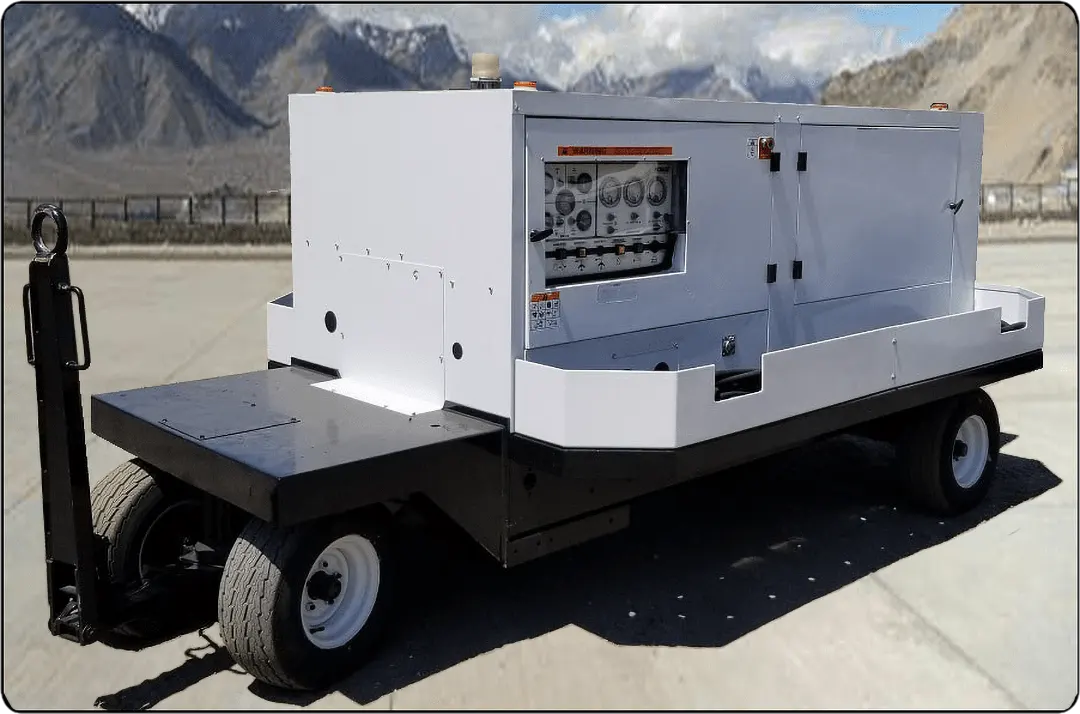
Large towed power units are often somewhat top-heavy. Therefore, they must be towed at restricted speeds, and sharp turns should be avoided. An example of a large mobile power unit is shown in Figure 1.
Self-propelled power units are normally more expensive than towed units and, in most instances, provide a wider range of output voltages and frequencies.
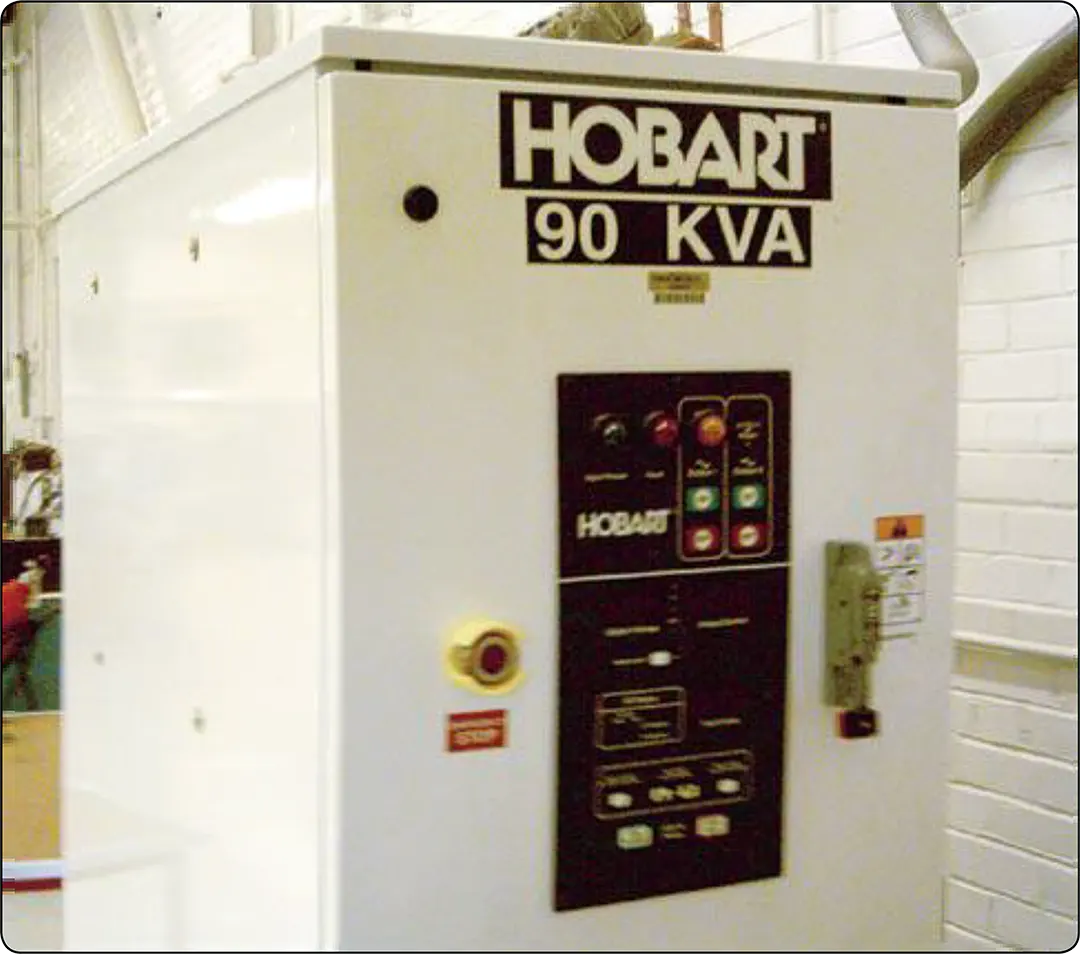
The stationary power unit shown in Figure 2 is capable of supplying varying amounts of DC power, as well as 115/200-volt, three-phase, 400-cycle AC power for a specified operating duration of five minutes.
When using ground electrical power units, position the unit to prevent it from colliding with the aircraft being serviced or other nearby aircraft if its brakes fail. Park the unit so that the service cable is extended to nearly its full length away from the aircraft, but not so far that the cable becomes stretched or places excessive stress on the aircraft electrical receptacle.
Observe all electrical safety precautions when servicing an aircraft. Never move a power unit while its service cables are connected to an aircraft or while its generator system is engaged.
Hydraulic Ground Power Units
Portable hydraulic test stands are manufactured in many sizes and capacities. [Figure 3] Some have a limited range of operation, while others can perform most of the system tests that fixed-shop test stands are designed to perform.
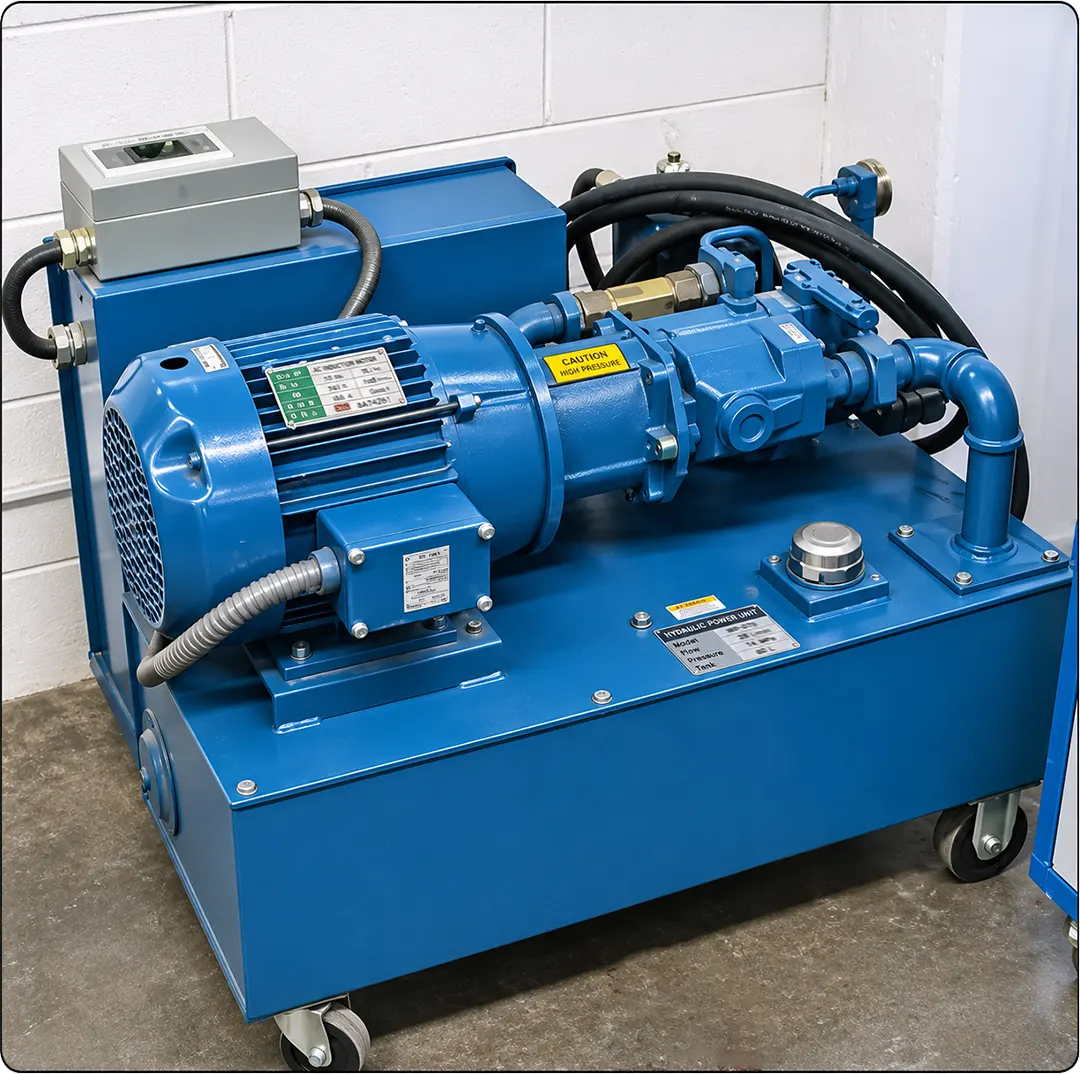
Hydraulic power units, sometimes called hydraulic mules, provide hydraulic pressure to operate aircraft systems during maintenance. They can be used to:
- Drain aircraft hydraulic systems.
- Filter aircraft hydraulic system fluid.
- Refill aircraft hydraulic systems with clean fluid.
- Check aircraft hydraulic systems for proper operation and leaks.
This type of portable hydraulic test unit is usually electrically powered. It uses a hydraulic system capable of delivering a variable volume of fluid from zero to approximately 24 gallons per minute at variable pressures up to 3,000 psi.
When operating at pressures of 3,000 psi or more, extreme caution must be exercised. A small stream of hydraulic fluid escaping under high pressure can penetrate the skin and cause serious injection injuries.
Therefore, inspect all hydraulic lines used with the system for cuts, fraying, or other damage. Keep the lines free of kinks and twists. Never use your hand to search for a high-pressure hydraulic leak.
When not in use, hydraulic power unit lines should be stored, preferably wound on a reel, and kept clean, dry, and free from contaminants.
Ground Support Air Units
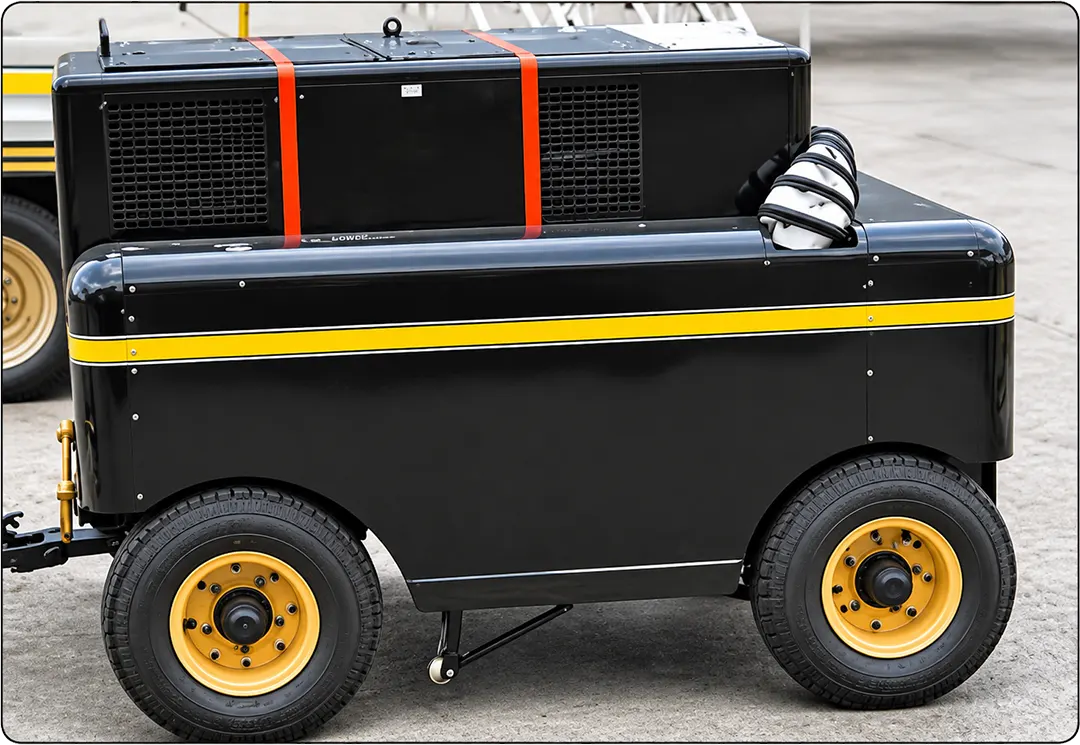
Air carts are used to provide low-pressure, high-volume airflow, typically up to 50 psi, for aircraft engine starting and for heating and cooling the aircraft on the ground using its onboard systems.
An air cart generally consists of an auxiliary power unit (APU) installed in the cart. The APU supplies bleed air from its compressor to operate aircraft systems or assist in starting aircraft engines. [Figure 4]
The required air pressure and airflow depend on the aircraft and the particular servicing operation. Always follow the aircraft manufacturer’s instructions when connecting and operating an air-start unit.
Ground Air Heating and Air Conditioning
Most airport gates have facilities that provide heated or cooled air to aircraft.
These heating and cooling units are permanent installations connected to the aircraft ventilation system through a large hose. Portable heating and air-conditioning units can also be moved close to the aircraft and connected through an air duct to maintain a comfortable cabin temperature.
Oxygen Servicing Equipment
Before servicing any aircraft, consult the specific aircraft maintenance manual to determine the correct servicing equipment and procedures.
When servicing an aircraft with gaseous oxygen, two personnel are required under the procedure described in the original handbook. One person is stationed at the control valves of the servicing equipment, while the other is positioned where the pressure in the aircraft oxygen system can be observed. Communication between the two personnel is essential in the event of an emergency.
Do not service aircraft with oxygen during fueling, defueling, or other maintenance operations that could provide a source of ignition. Oxygen servicing of aircraft is to be accomplished outside hangars in accordance with the applicable servicing procedures.
Oxygen used in aircraft is available in two forms: gaseous and liquid. The type used on a particular aircraft depends on the equipment installed in that aircraft.
Gaseous oxygen is stored in high-pressure cylinders, while liquid oxygen, commonly referred to as LOX, is stored and converted into usable gaseous oxygen in a liquid oxygen converter.
Oxygen is commercially available in three general types: aviator’s breathing oxygen, industrial oxygen, and medical oxygen.
Only oxygen specifically approved for aircraft breathing oxygen systems should be used. The original handbook identifies oxygen marked “Aviator’s Breathing Oxygen” that meets Federal Specification BB-O-925A, Grade A, or its equivalent.
Industrial oxygen may contain impurities that could affect the health of pilots, crew members, or passengers. Medical oxygen, although generally pure, may contain moisture that can freeze at the low temperatures encountered at the altitudes where supplemental oxygen is required.
Oxygen Hazards
Gaseous oxygen is chemically stable and nonflammable. However, combustible materials ignite more readily and burn with greater intensity in an oxygen-enriched atmosphere.
Oil, grease, and other combustible contaminants present a serious hazard when exposed to oxygen, particularly under high-pressure conditions. They can ignite violently and create dangerous fire or explosion conditions.
Physical damage to, or failure of, oxygen containers, valves, or plumbing can also result in a violent release of pressure, creating an extreme danger to life and property.
It is essential to maintain the highest standards of cleanliness when handling oxygen equipment. Only qualified and authorized personnel should service aircraft gaseous oxygen systems.
Liquid oxygen presents an additional hazard because of its extremely low temperature. Its boiling point is approximately −297 °F (−183 °C). Contact with liquid oxygen can cause severe cold burns or frostbite.