
Fire protection is an essential part of aircraft maintenance safety. Aircraft maintenance activities involve flammable liquids, gases, electrical equipment, hot surfaces, and tools that can produce sparks. These conditions create potential fire hazards in maintenance shops, hangars, and flight line areas.
Aircraft maintenance technicians must understand the basic requirements for fire, the classification of fires, the types of fire extinguishers available, and the correct procedures for inspecting and using fire-extinguishing equipment. Proper training and fire-prevention practices help protect personnel, aircraft, equipment, and facilities.
Table of Contents
Table of Contents
Requirements for Fire to Occur
Three elements are required for a fire to occur. These elements are fuel, heat, and oxygen. Removing any one of these elements can extinguish a fire, provided that the conditions necessary for combustion are no longer present.
- Fuel: A combustible material that combines chemically with oxygen in the presence of sufficient heat, releasing additional heat during combustion. Fuel may be a solid, liquid, or gas.
- Heat: The energy required to raise the fuel to its ignition temperature and initiate combustion. Heat accelerates the chemical reaction between fuel and oxygen, releasing additional heat.
- Oxygen: An element that combines chemically with another substance through oxidation. Rapid oxidation, accompanied by a noticeable release of heat and light, is called combustion or burning.
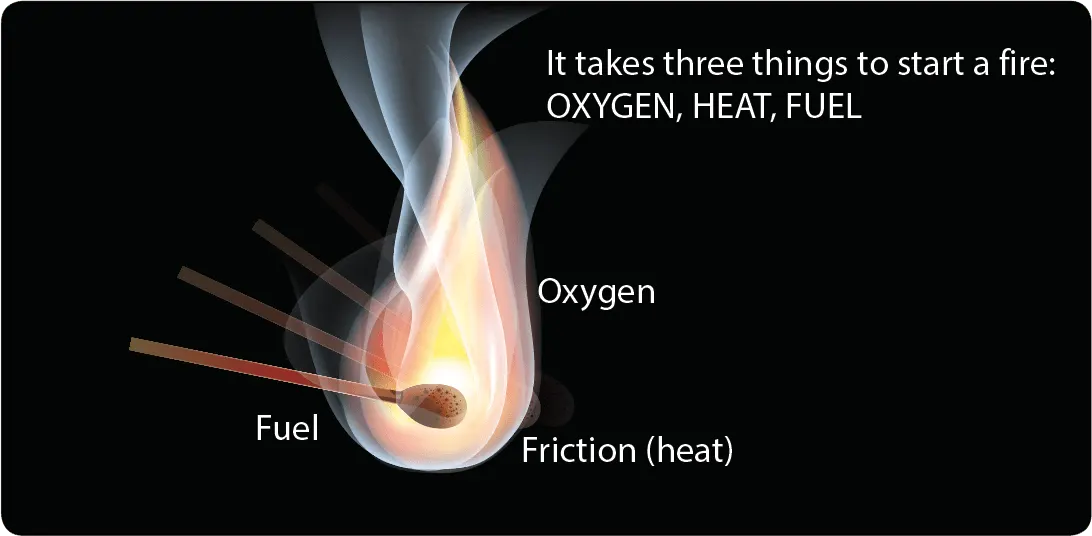
These three elements form the fire triangle. Fire-prevention and extinguishing methods work by removing or interrupting one or more of these requirements.
Classification of Fires
The National Fire Protection Association (NFPA) classifies fires according to the type of fuel involved. For aircraft maintenance applications, four fire classes are particularly relevant:
- Class A: Fires involving ordinary combustible materials, such as wood, cloth, paper, upholstery materials, rubber, and similar substances.
- Class B: Fires involving flammable petroleum products or other flammable or combustible liquids, such as greases, solvents, paints, and oils.
- Class C: Fires involving energized electrical wiring and equipment, where an electrically nonconductive extinguishing agent is required.
- Class D: Fires involving combustible metals, such as magnesium and other reactive metals. These fires may occur in maintenance shops or during work involving certain aircraft components, wheels, and brakes.
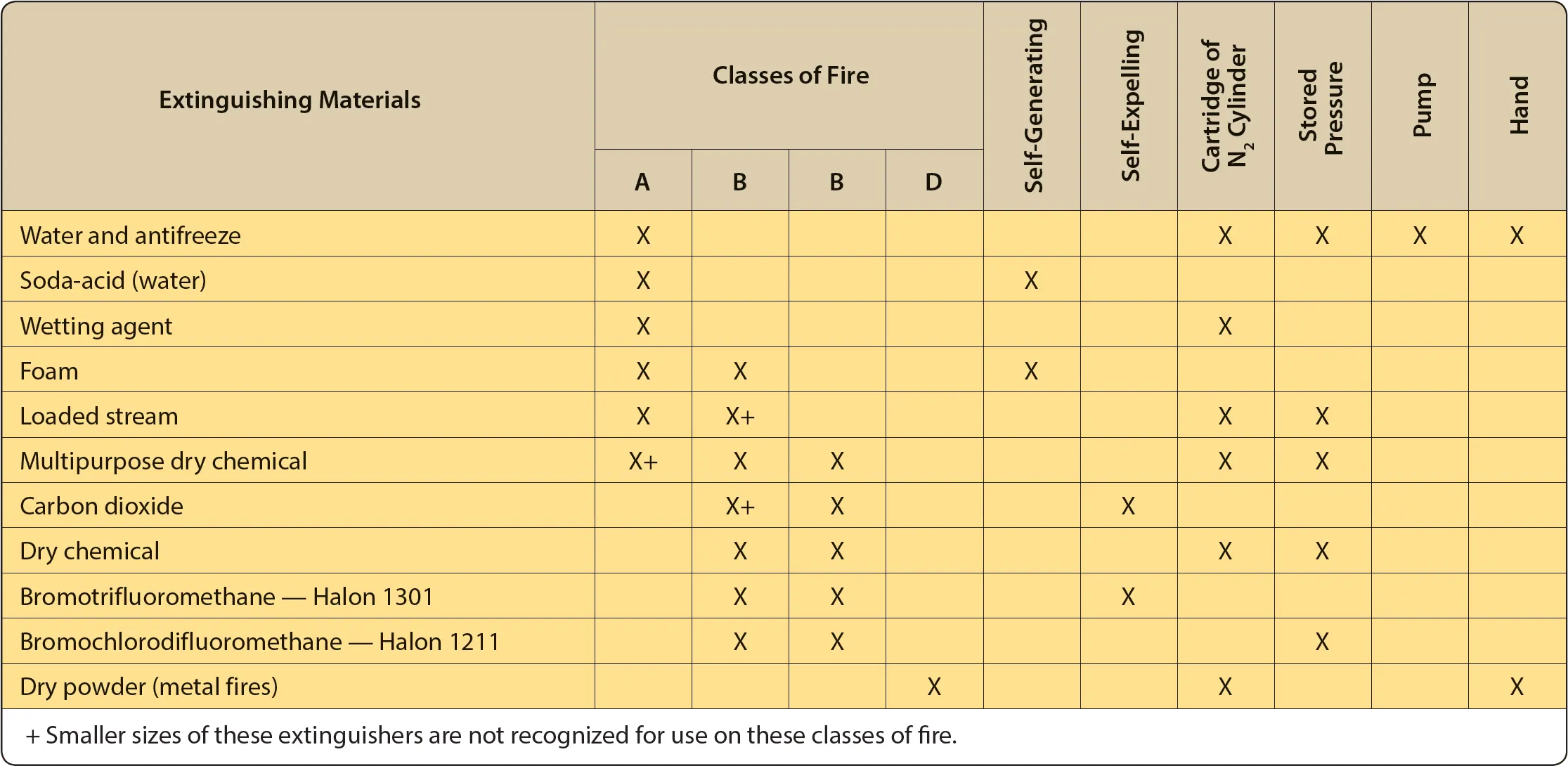
Any of these fire classes can occur during aircraft maintenance or ground operations. A particular type of fire extinguisher or extinguishing agent is required for each fire class. The extinguisher must be selected according to the type of fire and its approved rating.
Types and Operation of Shop and Flight Line Fire Extinguishers
Different extinguishing agents are designed to control different types of fires. The following sections describe several types of extinguishers and their operating principles.
Water Fire Extinguishers
Water extinguishers are suitable for Class A fires involving ordinary combustible materials. Water primarily extinguishes these fires by cooling the burning material below its ignition temperature.
Since most petroleum products float on water, water-type extinguishers are not recommended for Class B fires. Water can spread burning liquids and make the fire worse.
Extreme caution is also necessary around electrical fires (Class C). Water must not be applied to energized electrical equipment because it can conduct electricity and expose the operator to electric shock. Electrical power must be safely disconnected before using a water extinguisher. Residual electrical energy stored in capacitors, coils, and similar components must also be considered.
Never use water-type extinguishers on Class D fires involving combustible metals. Water can react violently with certain burning metals, potentially producing flammable hydrogen gas and causing an explosive reaction.
Water extinguishers operate in different ways. Some are hand-pumped, while others are pressurized. Pressurized extinguishers may use stored gas to force water out of the container.
Older water extinguishers also used a soda-acid arrangement. In this design, acid reacts with sodium bicarbonate (soda) inside the extinguisher, generating carbon dioxide gas and building pressure to discharge the water. This is an obsolete design and should be treated as historical information rather than a recommendation for current use.
Carbon Dioxide (CO₂) Fire Extinguishers
Carbon dioxide (CO₂) extinguishers are commonly used for Class B and Class C fires. They extinguish fires primarily by reducing the oxygen concentration around the burning material. A typical carbon dioxide fire extinguisher is shown in Figure 2.

CO₂ extinguishers are particularly useful around certain electrical equipment because carbon dioxide is electrically nonconductive and does not leave a solid chemical residue.
However, CO₂ extinguishers are generally not recommended for Class A fires because the burning material may continue to smolder and reignite after the gas disperses. They must never be used on Class D combustible-metal fires.
When operating a CO₂ fire extinguisher, the discharge horn and other components can become extremely cold. Contact with these components may cause cold burns or frostbite. Use the extinguisher by its designated handle and avoid touching the discharge horn during operation.
Extreme caution is also necessary when using CO₂ extinguishers in enclosed or confined spaces. Carbon dioxide can displace oxygen and create a dangerous atmosphere for the operator and other personnel.
CO₂ fire extinguishers generally use a self-expelling method of operation. The gas is stored under high pressure inside the cylinder and is released when the valve mechanism is activated. Some designs use a seal or frangible disk to retain the pressure until the extinguisher is operated.
Once discharged, the extinguisher must be inspected and serviced or replaced in accordance with the manufacturer’s instructions before being returned to service.
Halogenated Hydrocarbon Fire Extinguishers
Halogenated hydrocarbon extinguishing agents were developed for use on fires involving flammable liquids and energized electrical equipment. Some agents were also suitable for other fire classes, depending on their formulation and extinguisher rating.
These agents were commonly associated with the trade name Freon™ and were identified by Halon numbers according to their chemical compositions.
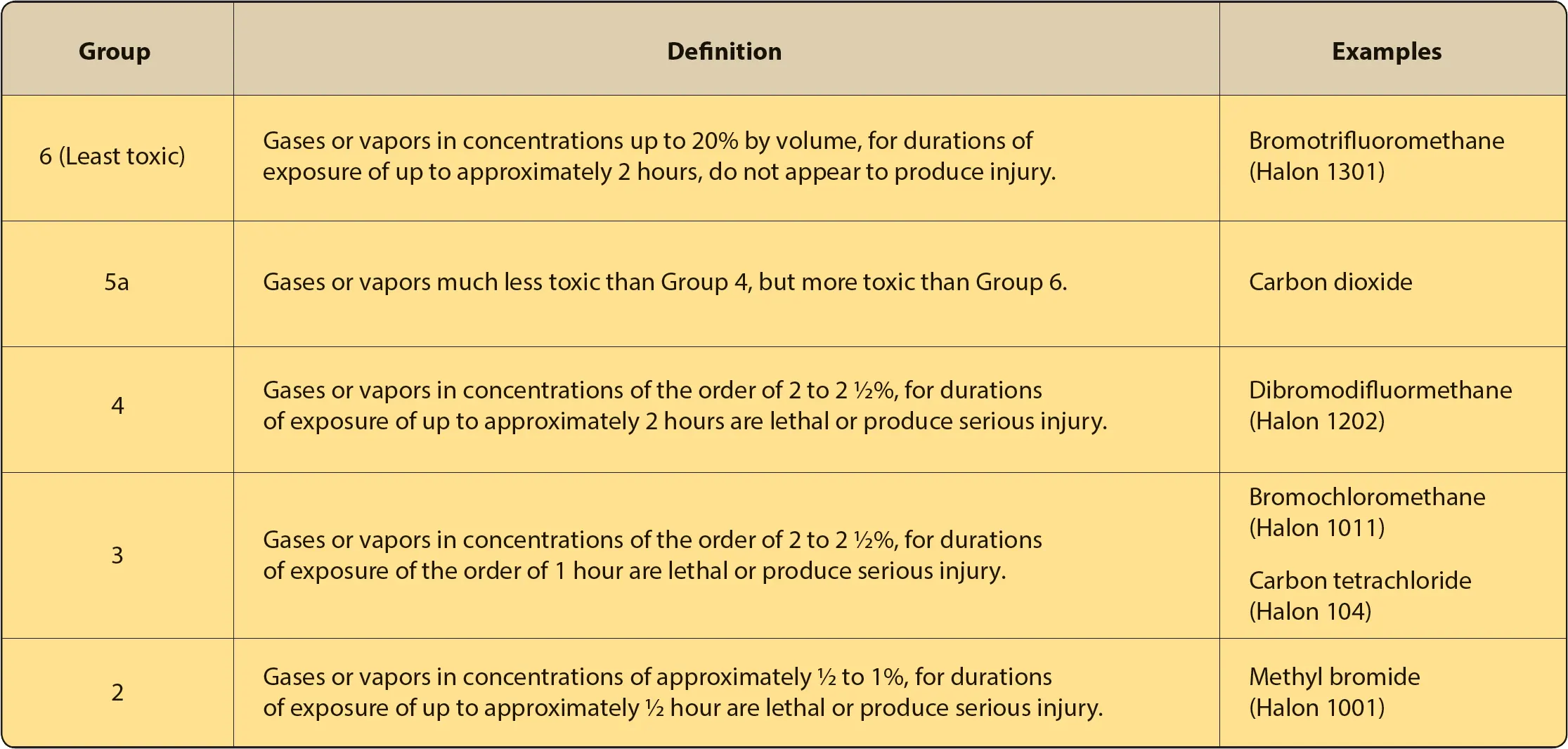
Several older halogenated extinguishing agents are described below. These descriptions are included for historical aircraft-maintenance knowledge. Their toxicity, environmental effects, and current regulatory restrictions must be considered.
Carbon Tetrachloride (Halon 104)
Carbon tetrachloride (Halon 104), with the chemical formula CCl₄, was formerly used as a fire-extinguishing agent. It is extremely toxic.
When carbon tetrachloride is exposed to high temperatures or flames, it can produce hazardous decomposition products, including phosgene and hydrogen chloride. These toxic gases present a serious health hazard.
Carbon tetrachloride is not approved for fire-extinguishing use. Older containers found in or around shops and hangars must be handled and disposed of through appropriate hazardous-material procedures and in accordance with applicable environmental regulations.
Methyl Bromide (Halon 1001)
Methyl bromide (Halon 1001), with the chemical formula CH₃Br, is a liquefied gas. It is highly toxic and can be corrosive to certain metals, including aluminum alloys, magnesium, and zinc.
Halon 1001 is not recommended for aircraft use.
Chlorobromomethane (Halon 1011)
Chlorobromomethane (Halon 1011), with the chemical formula CH₂ClBr, is a liquefied gas and is highly toxic.
Like methyl bromide, Halon 1011 is not recommended for aircraft use.
Dibromodifluoromethane (Halon 1202)
Dibromodifluoromethane (Halon 1202), with the chemical formula CBr₂F₂, is another historical halogenated extinguishing agent. It is associated with significant toxicity concerns and is not recommended for aircraft use in the referenced handbook material.
Bromochlorodifluoromethane (Halon 1211)
Bromochlorodifluoromethane (Halon 1211), with the chemical formula CBrClF₂, was widely used in portable fire extinguishers.
It is a clean extinguishing agent that leaves little or no residue after discharge. It acts rapidly on fires by interfering chemically with the combustion process and is effective against certain Class B and Class C fires.
Halon 1211 also has useful fire-suppression properties that help reduce the possibility of reignition after the fire has been extinguished. However, it is an ozone-depleting substance, and its production and use are subject to environmental restrictions.
Bromotrifluoromethane (Halon 1301)
Bromotrifluoromethane (Halon 1301), with the chemical formula CF₃Br, was used primarily in fixed fire-extinguishing systems.
Like Halon 1211, it suppresses combustion by interfering with the chemical reaction involved in fire. One important difference is that Halon 1211 is commonly discharged as a liquid stream or spray, while Halon 1301 is discharged as a gas.
Halon 1301 was widely used in aircraft fire-protection systems because it is effective in enclosed spaces and leaves little residue. However, it is also an ozone-depleting substance.
Dry Powder and Dry Chemical Fire Extinguishers
Dry powder extinguishers are primarily designed for Class D fires involving combustible metals. They contain special extinguishing powders selected for the particular metal involved.
The method of operation varies. Some extinguishers use a gas cartridge, while others use stored pressure inside the container to discharge the powder. Larger quantities of special metal-fire extinguishing powder may also be supplied in containers for appropriate application.
Dry powder is not generally recommended for use around aircraft unless required for a specific combustible-metal fire and approved for that hazard. Powder residues can make cleanup difficult and may damage electronic equipment or other delicate components.
Dry chemical extinguishers are different from Class D dry powder extinguishers. Common dry chemical agents are used for Class B and C fires, and multipurpose dry chemical extinguishers may also be rated for Class A fires. Always check the extinguisher label to determine its approved applications.
Inspection of Fire Extinguishers
Fire extinguishers must be inspected periodically to ensure that they remain accessible, properly charged, and ready for use. Inspections should be performed using an appropriate checklist.
If a checklist is unavailable, the following items should be checked as a minimum:
- Proper location: Ensure that the appropriate extinguisher is installed in its designated location and is readily accessible.
- Safety seals: Check that the safety pin and tamper seal are intact.
- Cleanliness and condition: Check for dirt, rust, corrosion, or other deterioration.
- Pressure gauge: Ensure that the gauge or pressure indicator is within the manufacturer’s specified operating range.
- Proper weight: Check the weight where required, particularly for extinguishers without a pressure gauge.
- Nozzle condition: Ensure that the nozzle and discharge hose are free from obstructions.
- Physical condition: Check for visible damage, leakage, corrosion, or other defects.
Airport or local fire departments can often assist in preparing inspection checklists and providing guidance on fire-extinguisher maintenance. They may also help arrange repairs or replacement when extinguishers are found to be defective.
In accordance with applicable workplace requirements, portable fire extinguishers should receive regular visual inspections and scheduled maintenance. For example, OSHA requires monthly visual inspections and an annual maintenance check for covered workplace extinguishers in the United States.
Identifying Fire Extinguishers
Fire extinguishers are marked to indicate the classes of fire for which they are suitable. These markings help personnel identify the correct extinguisher for a particular fire hazard.
The symbols shown in Figure 5 represent the different classes of fire and the corresponding extinguisher applications. Appropriate markings must be placed on the extinguisher and, where necessary, in a conspicuous location near the extinguisher.
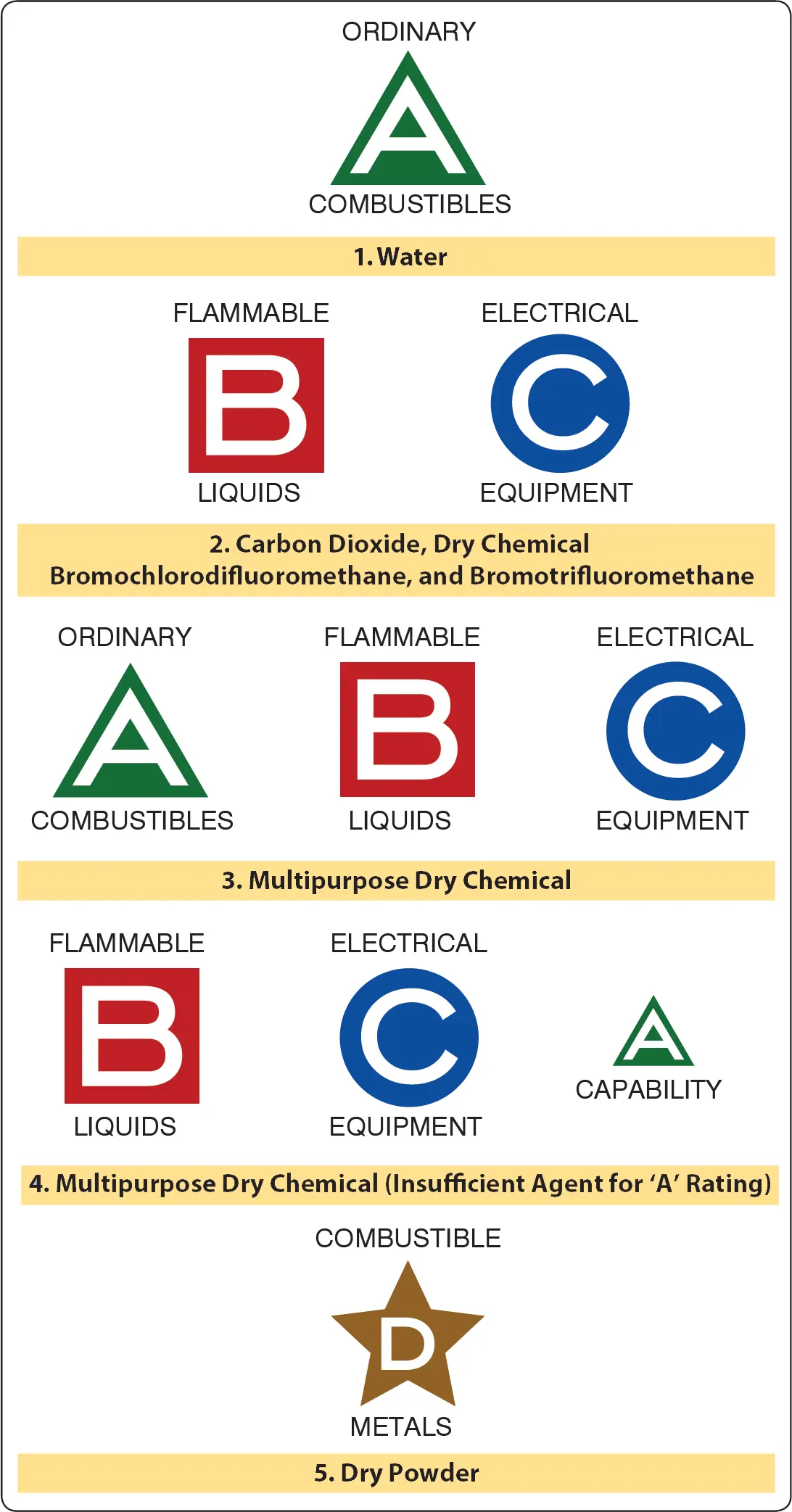
When a storage location is marked for a particular class of fire extinguisher, ensure that the extinguisher kept there is actually suitable for that fire class. For example, if a location is identified for a Class B fire extinguisher, the extinguisher installed at that location must carry the appropriate Class B rating.
Markings may be applied using decals, paint, or other suitable methods. They must remain legible and sufficiently durable for the environment in which they are installed. For example, markings used outdoors must be more resistant to weather and deterioration than those used inside hangars or offices.
When markings are applied directly to an extinguisher, they should be positioned on the front of the shell, above or below the extinguisher nameplate, where they can be easily seen.
The markings must be large enough and clear enough to be identified by a person with average eyesight from a distance of at least 3 feet.
When markings are applied to wall panels or other locations near fire extinguishers, they must be large enough to be easily identified from a distance of at least 25 feet. [Figure 6]
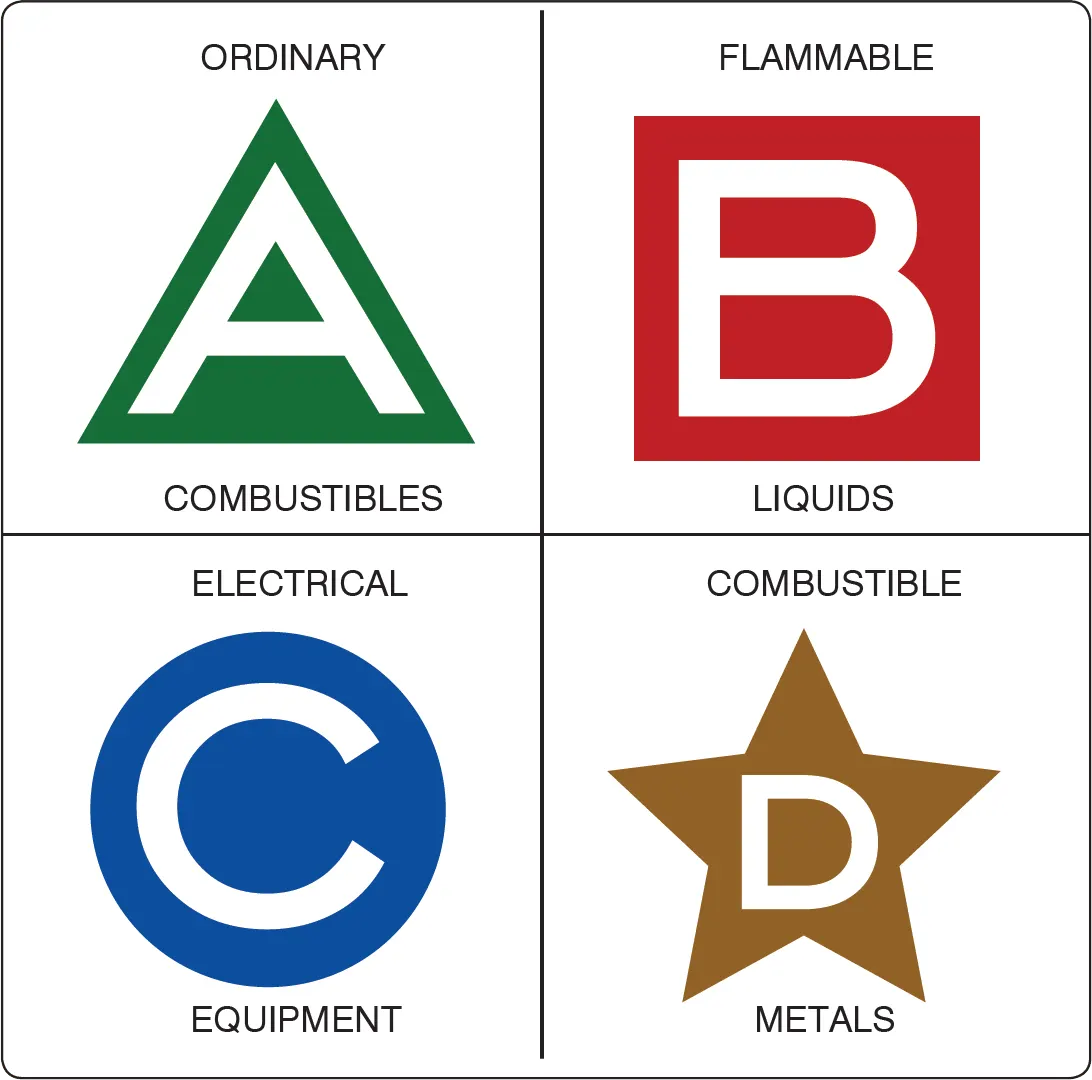
The extinguisher symbols and labels should be kept visible and unobstructed so that personnel can quickly identify the correct equipment during an emergency.
Using Fire Extinguishers
Before using a fire extinguisher, ensure that it is suitable for the class of fire involved. Using the wrong type of extinguisher can make the situation more dangerous.
Fire extinguishers commonly use a safety pin that must be removed before the operating handle can be activated. The general operating procedure is commonly remembered by the acronym PASS:
- Pull: Pull the safety pin to release the operating mechanism.
- Aim: Aim the discharge nozzle or hose at the base of the fire.
- Squeeze: Squeeze the operating handle to discharge the extinguishing agent.
- Sweep: Sweep the nozzle from side to side across the base of the fire until the flames are extinguished.
Stand at the distance recommended by the extinguisher manufacturer and approach only when it is safe to do so. Maintain a clear escape route behind you.
Never attempt to fight a fire that is spreading rapidly, producing dangerous smoke, or threatening your escape route. Raise the alarm, evacuate the area, and contact the appropriate emergency response personnel.
After an extinguisher has been discharged, it must be removed from service for inspection, recharging, or replacement before being returned to its designated location.