
Fuel servicing is an important aircraft ground-maintenance operation. It involves selecting the correct aviation fuel, preventing contamination, safely refueling aircraft, and following approved procedures when removing fuel from aircraft tanks.
Aircraft fuel must meet the specifications required by the engine and aircraft manufacturer. Incorrect fuel selection, contamination, or improper fueling procedures can cause engine malfunction, fire, and serious accidents. Therefore, personnel involved in aircraft fueling must understand fuel identification, contamination control, fueling hazards, and the correct servicing procedures.
Table of Contents
Table of Contents
Types of Fuel and Identification
Two general types of aviation fuel are used: aviation gasoline, also known as AVGAS, and turbine fuel, also known as jet fuel.
Aviation Gasoline (AVGAS)
Aviation gasoline (AVGAS) is used in aircraft powered by reciprocating engines. The grades described in the original handbook include 80/87, 100/130, and 100LL (low lead). A fourth grade, 115/145, is identified as having limited use in large reciprocating-engine aircraft.
The two numbers in a grade such as 80/87 indicate the lean-mixture and rich-mixture octane or performance ratings of the fuel. In other words, with 80/87 AVGAS, 80 is the lean-mixture rating and 87 is the rich-mixture rating.
To avoid confusion, AVGAS is commonly identified by its grade, such as 80, 100, 100LL, or 115.
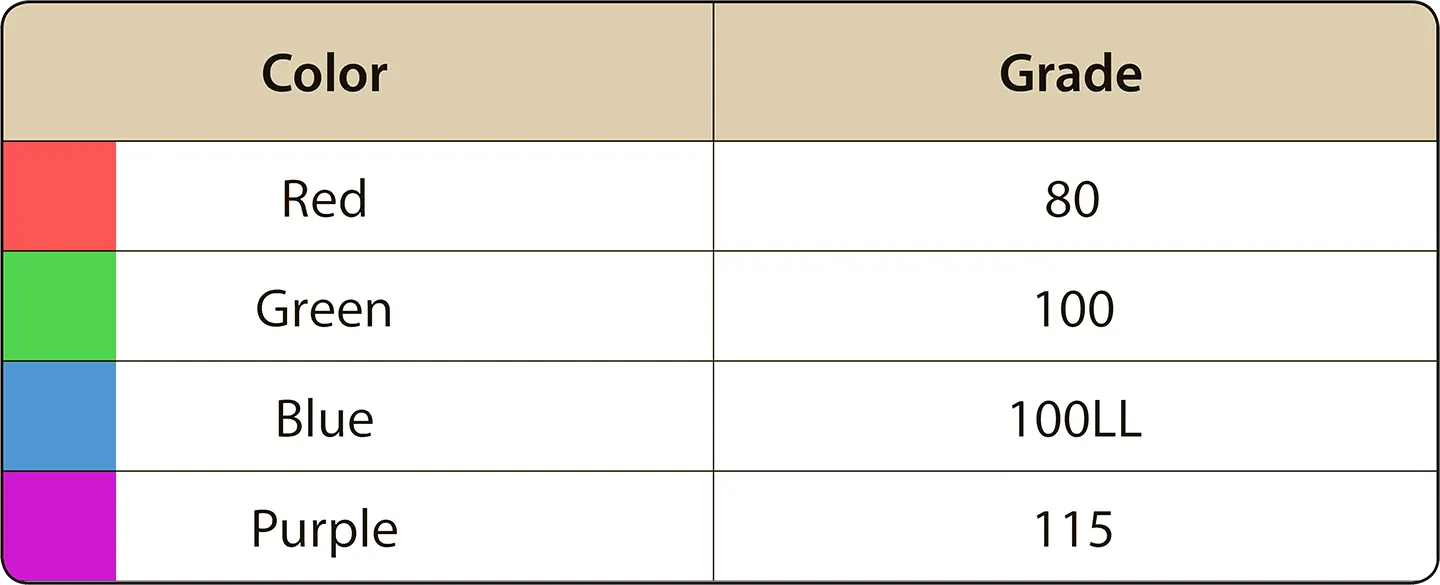
AVGAS can also be identified by a color code. The fuel color must correspond to the appropriate identification markings on the piping and fueling equipment. Figure 1 shows the traditional AVGAS color and grade identification system.
Turbine Fuel (Jet Fuel)
Turbine fuel, also known as jet fuel, is used in turbojet, turbofan, turboprop, and turboshaft engines.
Three types of turbine fuel commonly identified in civilian aviation are Jet A, Jet A-1, and Jet B. Jet A and Jet A-1 are kerosene-type fuels, while Jet B is a wide-cut fuel consisting of a blend of gasoline-range and kerosene-range hydrocarbons.
Jet fuel is identified by black markings on associated piping and fueling equipment. However, the actual fuel may appear clear or straw-colored.
Before using or mixing aviation gasoline and turbine fuel, refer to the applicable aircraft and engine documentation, including the Type Certificate Data Sheet (TCDS), where appropriate.
Adding jet fuel to an AVGAS-powered reciprocating engine can reduce engine power and may cause detonation, engine damage, and possible loss of life. Adding AVGAS to jet fuel can introduce lead deposits into a turbine engine, potentially reducing its service life.
The correct fuel type and grade must always be confirmed before fueling. Never assume that different aviation fuels can be mixed or used interchangeably.
Contamination Control
Fuel contamination refers to any unwanted substance present in the fuel. The main types of contamination found in aviation fuel include water, solid particles, and microbial growth.
Contamination control is extremely important because contaminated fuel can cause engine malfunction, engine stoppage, or failure, potentially resulting in loss of life.
The best method of controlling contamination is to prevent it from entering the fuel system. Some contamination may still occur within the fuel system. Filters, separators, and screens help remove many contaminants before they reach sensitive fuel-system components.
Water Contamination
Water in aviation fuel generally occurs in two forms: dissolved water and free water.
Dissolved water is not normally a major problem until the fuel temperature decreases and some of the dissolved water separates from the fuel as free water. If the temperature becomes sufficiently low, ice crystals may form and clog fuel filters and other small passages.
Free water can appear as water slugs or entrained water.
- Water slugs: These are concentrated amounts of free water that collect at low points in fuel tanks and are normally removed during fuel sampling and draining.
- Entrained water: This consists of suspended water droplets. The droplets may be too small to be seen individually but can give the fuel a cloudy or hazy appearance. The droplets gradually settle out of the fuel.
Solid Contamination
Solid contaminants are materials that do not dissolve in fuel. Common examples include rust, dirt, sand, gasket material, lint, and fragments of shop towels.
Fuel controls and other fuel-system components have close operating tolerances. Particles as small as 1/20 the diameter of a human hair can damage or obstruct these components.
Therefore, fuel handling equipment, containers, filters, and servicing connections must be kept clean to prevent solid contamination from entering the fuel system.
Microbiological Growth
Microbiological growth is a particular problem in turbine fuel. Various microorganisms can grow in the water present in jet fuel tanks.
Some microorganisms are airborne, while others are found in soil. They can enter an aircraft fuel system during fueling operations.
Conditions that favor microbial growth include warm temperatures and the presence of water containing iron oxide and mineral salts. Keeping fuel tanks as free as possible from water helps control microbial growth.
The effects of microorganisms include:
- Formation of slime or sludge that can foul filters, separators, and fuel controls.
- Emulsification of the fuel.
- Formation of corrosive compounds that can attack fuel tank structures.
- Unpleasant odors.
In wet-wing fuel tanks, microbial contamination can be particularly damaging because the tank structure forms part of the aircraft structure.
Fueling Hazards
The volatility of aviation fuels creates a significant fire hazard. Volatility is the ability of a liquid to change into a vapor at a relatively low temperature.
Liquid aviation fuel does not normally burn by itself. It is the fuel vapor mixed with air that burns when exposed to a suitable ignition source. Therefore, the vapor produced by aviation fuel presents a serious fire hazard during fueling operations.
Static Electricity
Static electricity can be generated when one substance moves or rubs against another. Fuel flowing through hoses and pipelines can generate static electrical charges.
Another important source of static electricity is the movement of an aircraft through the atmosphere. This movement can cause electrical charges to accumulate on the aircraft structure.
If the aircraft and fueling equipment are not properly bonded and grounded in accordance with the approved fueling procedure, a difference in electrical potential may exist between them. When an electrical discharge occurs, the resulting spark can ignite fuel vapor.
To reduce this hazard, aircraft and fueling equipment must be properly bonded and grounded as required by the applicable fueling procedures.
Fuel Exposure
Breathing aviation fuel vapors can be harmful. Exposure must be minimized by following appropriate safety precautions and avoiding unnecessary inhalation of fuel vapors.
Fuel spilled on clothing or skin must be removed as soon as possible. Contaminated clothing should be removed, and affected skin should be washed thoroughly.
Fueling Procedures
The proper fueling of an aircraft is the responsibility of the owner or operator. However, this does not relieve the person performing the fueling operation of the responsibility to use the correct fuel and follow safe fueling procedures.
There are two basic methods of fueling aircraft: the over-the-wing method and the single-point pressure-fueling method.
Over-the-Wing Fueling
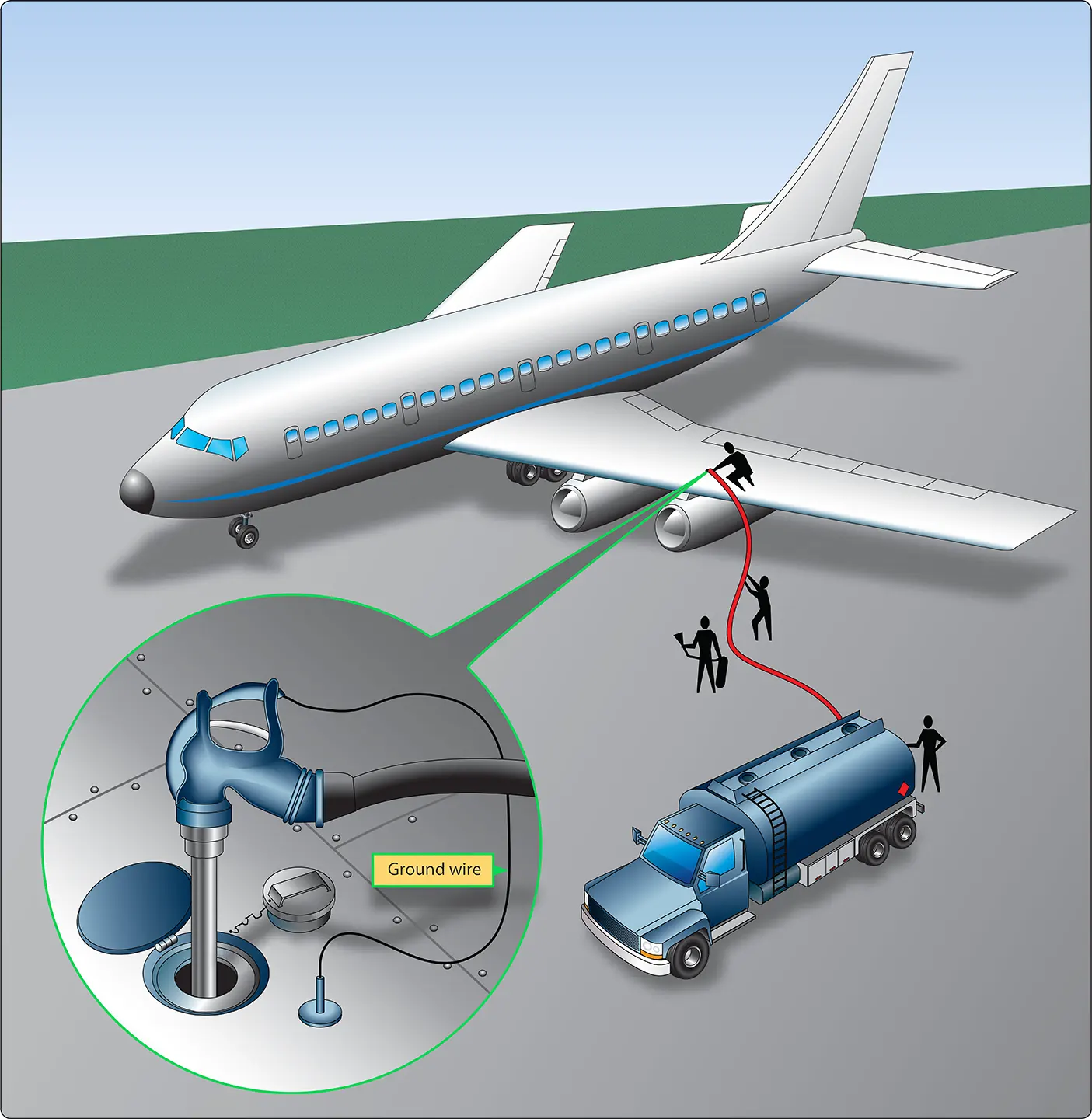
Smaller aircraft are commonly fueled using the over-the-wing method. This method involves inserting the fuel nozzle into the fueling port located on the upper surface of the wing.
The fuel is supplied directly into the aircraft fuel tank through the filler opening. Proper care must be taken to prevent contamination and fuel spillage during the operation.
Single-Point Pressure Fueling
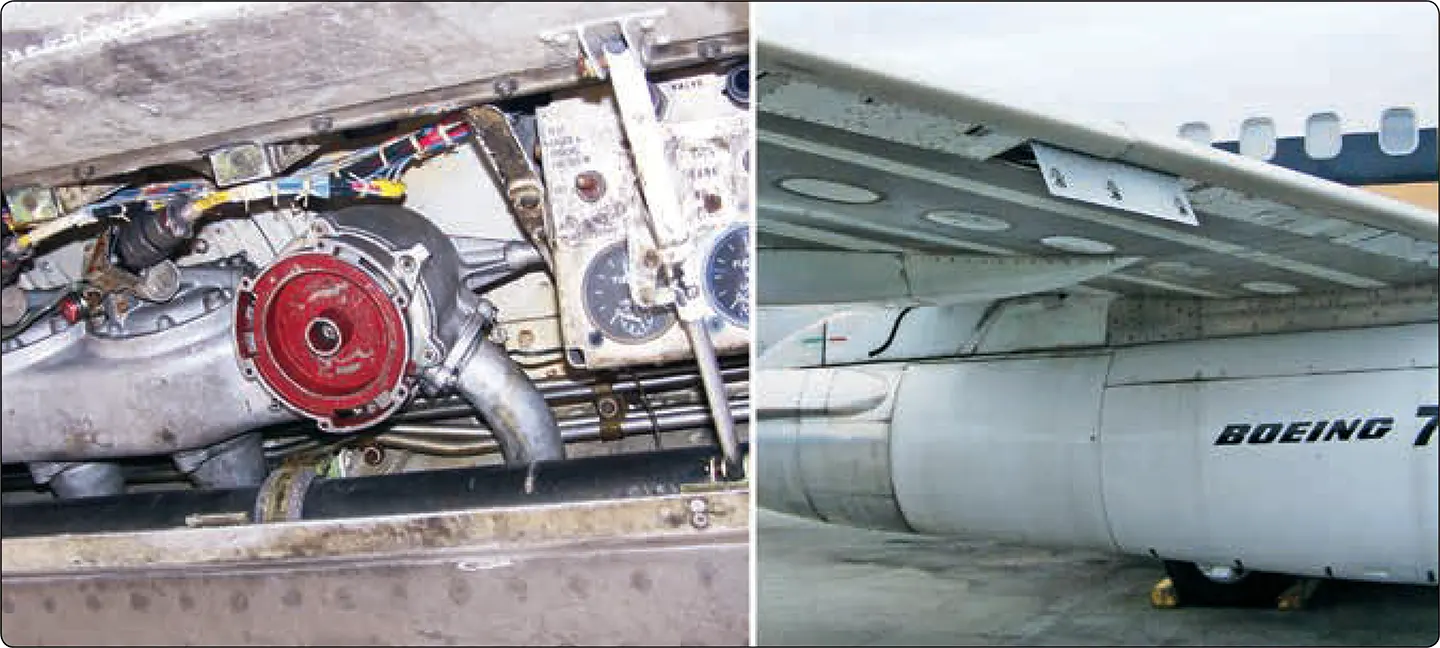
Larger aircraft commonly use a single-point pressure-fueling system. This system uses a pressure-fueling receptacle, usually located in the lower leading-edge area of the wing or another designated aircraft location, to supply fuel to the aircraft tanks.
This method reduces the time required for refueling, helps limit contamination, and allows the aircraft to be fueled through a controlled connection.
Most pressure-fueling systems consist of a pressure-fueling hose and a control panel containing switches, controls, and gauges. These allow the operator to fuel or defuel individual tanks or multiple tanks, as permitted by the aircraft system.
Each tank can be filled to a predetermined level through the system’s controls. The two fueling methods are illustrated in Figures 2 and 3.
Pre-Fueling Checks
Before fueling, the person performing the operation must check the following:
- Ensure that aircraft electrical systems and electronic equipment are configured as required by the aircraft manufacturer’s fueling procedure. This includes radar and other equipment that could present an ignition hazard.
- Keep shirt pockets and other exposed storage areas free of loose objects that could fall into the fuel tanks.
- Ensure that no flame-producing devices are carried or used by personnel involved in the fueling operation. Even a moment of carelessness could cause an accident.
- Verify that the correct type and grade of fuel are being used. Never substitute or mix AVGAS and jet fuel without specific approved authorization.
- Ensure that the required fuel sumps have been drained and inspected for contamination in accordance with the aircraft maintenance or servicing instructions.
- Wear appropriate eye protection. Other protective equipment, such as suitable gloves and protective clothing, can also help protect the skin from spilled or splashed fuel.
- Avoid fueling when nearby aircraft or equipment could blow dirt, dust, or other contaminants toward open fuel tanks or fueling connections.
- Observe the applicable lightning and adverse-weather restrictions. Do not fuel when lightning is within the prohibited distance specified by the airport, operator, or approved fueling procedure.
- Observe the applicable restrictions concerning operating ground radar and other potential sources of electromagnetic ignition hazards.
Fueling Using Mobile Equipment
When using mobile fueling equipment, follow these procedures:
- Approach the aircraft carefully. Position the fuel truck so that it can depart quickly if necessary without having to reverse.
- Set the fuel truck parking brake and chock its wheels to prevent unintended movement.
- Bond the aircraft and fueling equipment together before opening the fuel tank or beginning fuel transfer. Connect the required grounding equipment to designated grounding points in accordance with the approved procedure.
- Ensure that grounding and bonding connections make proper electrical contact at approved locations. Do not use the engine exhaust or propeller as grounding points. Doing so can damage the propeller and does not provide a reliable electrical connection between the engine and airframe.
- Bond the fuel nozzle to the aircraft at the designated point before opening the fuel tank or starting the fueling operation.
- Protect the wing and other aircraft surfaces against damage caused by spilled fuel or careless handling of the nozzle, hose, or bonding equipment.
- Check the fuel cap for proper installation and security before leaving the aircraft.
- Disconnect the bonding and grounding equipment in the reverse order specified by the approved procedure. If the aircraft is not going to be flown or moved soon, the aircraft grounding connection may be left attached when required by the applicable procedure.
Fueling from Pits or Cabinets
When fueling from pits or cabinets, follow the same general precautions used when fueling from mobile equipment.
Fueling pits and cabinets are usually designed with permanent grounding arrangements, which may eliminate the need to ground the equipment separately. However, the aircraft must still be properly grounded and bonded to the fueling equipment in accordance with the approved procedure.
Defueling
Defueling procedures vary according to the type of aircraft. Before defueling an aircraft, consult the applicable aircraft maintenance or servicing manual for the correct procedures and precautions.
Defueling can be accomplished by gravity draining or by pumping fuel out of the tanks.
When the gravity method is used, suitable equipment must be provided to collect the removed fuel safely.
When the pumping method is used, care must be taken to avoid damaging the fuel tanks and associated components. Removed fuel must not be mixed with serviceable fuel unless its identity, quality, and suitability have been established through the applicable fuel-quality procedures.
General Defueling Precautions
The following general precautions must be observed when defueling an aircraft:
- Ground and bond the aircraft and defueling equipment in accordance with the approved procedure.
- Turn off electrical and electronic equipment as required by the aircraft maintenance instructions.
- Have the correct type of fire extinguisher readily available.
- Wear appropriate eye protection and other required personal protective equipment.
- Follow the aircraft-specific procedures for collecting, identifying, handling, and storing the removed fuel.