
The human body is designed to function within a relatively narrow range of atmospheric conditions. During flight, changes in altitude affect atmospheric pressure and the availability of oxygen to the body. These changes can influence a pilot’s physical condition, judgment, and ability to operate an aircraft safely.
An understanding of atmospheric composition, human respiration, hypoxia, hyperventilation, and carbon monoxide poisoning is essential for pilots and aviation maintenance personnel. These physiological factors are also important when considering aircraft cabin environmental control systems, which help maintain a suitable environment for occupants during flight.
Composition of the Atmosphere
The mixture of gases that makes up the Earth’s atmosphere is commonly called air. Dry air is composed principally of approximately 78 percent nitrogen and 21 percent oxygen. The remaining 1 percent consists of various gases in smaller quantities, including argon, carbon dioxide, and other trace gases. Water vapor is also present in varying amounts.
Some atmospheric gases are essential to human life. Figure 1 illustrates the approximate proportions of the major gases in the atmosphere.
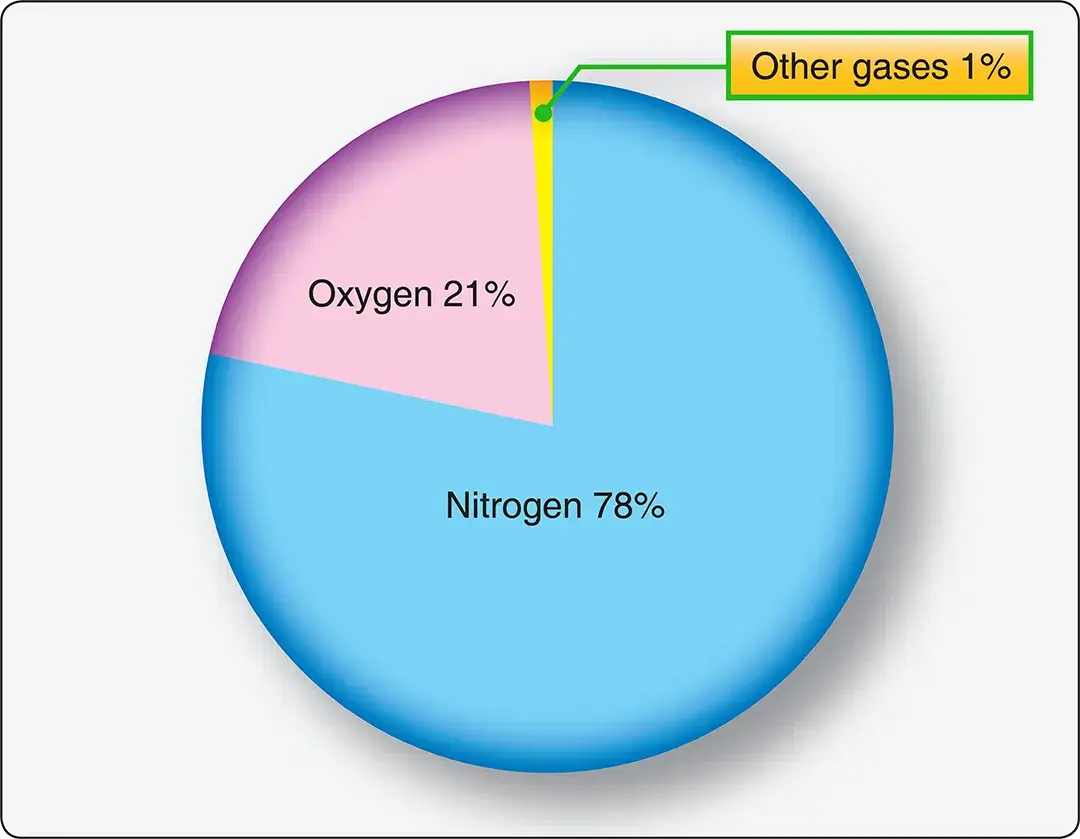
As altitude increases, atmospheric pressure and density decrease. However, the relative proportions of nitrogen and oxygen remain nearly constant throughout the lower atmosphere. This means that the percentage of oxygen in the air remains approximately 21 percent, even at high altitudes. The decrease in atmospheric pressure, rather than a decrease in the percentage of oxygen, is the primary reason less oxygen becomes available to the body.
Nitrogen is generally considered an inert gas in human respiration because it is not directly used by the body for normal metabolic processes. However, many nitrogen-containing compounds are essential to living organisms.
The small quantity of carbon dioxide in the atmosphere is utilized by plants during photosynthesis. The food supply for animals, including humans, ultimately depends on this process. Carbon dioxide also plays an important role in regulating human breathing.
The amount of water vapor in the atmosphere is variable and depends on temperature and humidity. Water also occurs in the atmosphere as liquid droplets and ice crystals. Water vapor and clouds influence the Earth’s energy balance and play important roles in weather formation.
Ozone is a form of oxygen containing three oxygen atoms per molecule, rather than the usual two. Most atmospheric ozone is formed through the interaction of oxygen and ultraviolet radiation in the stratosphere, where it forms the ozone layer. This layer is important to living organisms because it absorbs much of the Sun’s harmful ultraviolet radiation.
Ozone can also be produced by electrical discharges, such as lightning. It has a faint odor that may sometimes be detected after a thunderstorm. Ozone is important to the protection of life on Earth and to the chemical processes occurring in the upper atmosphere.
Human Respiration and Circulation
Oxygen and Hypoxia
Oxygen is essential for most living processes. The human body requires a continuous supply of oxygen to support cellular metabolism. A reduction in the normal oxygen supply can alter body functions, thought processes, and the level of consciousness.
The condition in which the body or its tissues receive insufficient oxygen is called hypoxia. In aviation, hypoxia is particularly important because it can develop at altitude and impair a pilot’s ability to operate an aircraft safely.
There are several conditions that can result in hypoxia. During aircraft operations, hypoxia commonly occurs when the reduced atmospheric pressure at high altitude lowers the partial pressure of oxygen available for transfer from the lungs into the bloodstream.
Although air continues to contain approximately 21 percent oxygen, the lower atmospheric pressure reduces the partial pressure of oxygen. Oxygen moves from the air in the lung alveoli into the blood according to the partial-pressure difference. As the pressure decreases, less oxygen can be transferred into the bloodstream.
At sea level, the atmospheric pressure is sufficient to maintain adequate oxygen transfer into the blood under normal conditions. As altitude increases, atmospheric pressure and the partial pressure of oxygen decrease.
The effects of altitude on oxygen availability vary among individuals. Factors such as physical condition, duration at altitude, exertion, and individual susceptibility influence the onset and severity of hypoxia.
At approximately 10,000 feet mean sea level (MSL), oxygen saturation may decrease, and some individuals may experience headache, fatigue, or impaired performance. At higher altitudes, the effects become increasingly pronounced.
At approximately 15,000 feet MSL, oxygen saturation may decrease substantially. Symptoms can include sleepiness, headache, blue coloration of the lips or fingernails, and increased pulse and respiration rates. Vision, judgment, and coordination may also become impaired, compromising the safe operation of an aircraft.
At still higher altitudes, the reduced oxygen pressure can cause severe impairment and eventual unconsciousness. The time available for useful performance decreases rapidly as altitude increases.
The oxygen saturation values and altitude-related effects described in the original material are approximate illustrations. They should not be interpreted as fixed thresholds because individual responses to altitude vary.
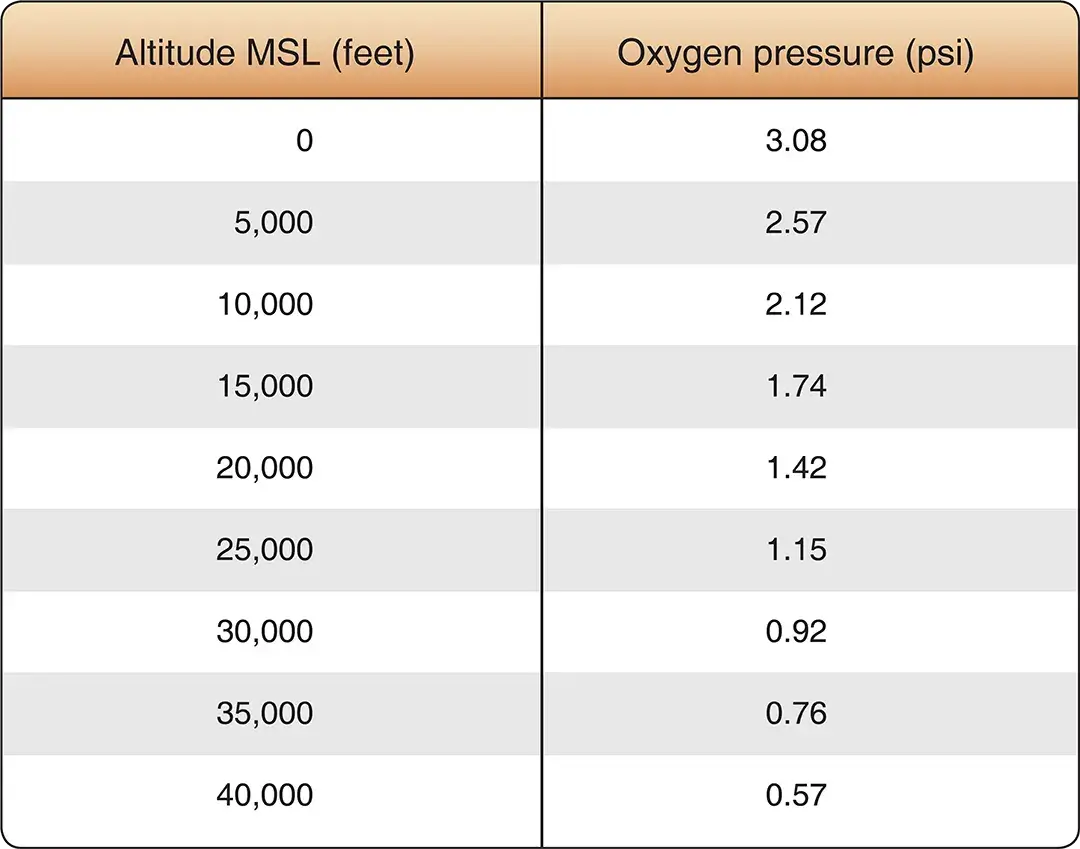
The table in Figure 2 illustrates how oxygen pressure decreases with increasing altitude. This reduction in pressure is the principal reason supplemental oxygen or cabin pressurization is required for safe operation at higher altitudes.
Hyperventilation
Another physiological phenomenon of interest to aviators is hyperventilation. Its symptoms can resemble those of hypoxia, making it important to recognize the difference.
When cells in the body use oxygen and nutrients delivered by the blood, carbon dioxide is produced as a by-product. The blood carries this carbon dioxide to the lungs, where it is exhaled.
Carbon dioxide plays an important role in regulating the depth and frequency of breathing. An increase in carbon dioxide in the blood normally stimulates faster and deeper breathing to remove the excess. Conversely, a reduction in carbon dioxide can decrease the body’s normal respiratory drive.
An appropriate balance of oxygen and carbon dioxide is necessary for normal body function.
Fear, panic, pain, or stress may occasionally cause a person to breathe excessively rapidly or deeply. This condition is known as hyperventilation. Excessive breathing removes more carbon dioxide from the blood than the body requires, resulting in a reduced carbon dioxide level.
The decrease in carbon dioxide causes changes in blood chemistry and can lead to constriction of blood vessels in the brain. As a result, a person may experience dizziness, tingling sensations, visual disturbances, and impaired concentration. These symptoms can resemble hypoxia.
Unlike hypoxia caused by reduced oxygen pressure at altitude, hyperventilation is primarily associated with excessive loss of carbon dioxide through breathing.
In an aircraft, however, the symptoms of hypoxia and hyperventilation may be difficult to distinguish. If the cause is uncertain, hypoxia should be treated as a priority by using supplemental oxygen and following the appropriate aircraft procedures.
When hyperventilation is identified, calming the person and encouraging controlled, normal breathing may help restore the carbon dioxide balance in the blood. Breathing into a paper bag should not be used because it can worsen an underlying oxygen deficiency.
Carbon Monoxide Poisoning
Carbon monoxide is a colorless, odorless, and highly toxic gas produced by the incomplete combustion of carbon-containing fuels. In aviation, it may be produced by engine exhaust or other combustion sources.
The presence of carbon monoxide can prevent the body from maintaining an adequate oxygen supply, resulting in hypoxia. This condition is known as carbon monoxide poisoning. Prolonged exposure can result in unconsciousness and even death.
Hemoglobin is the substance in the blood that attaches to oxygen in the lungs and transports it to the cells of the body. Carbon monoxide has a much greater affinity for hemoglobin than oxygen.
When carbon monoxide enters the lungs, it binds to hemoglobin and forms carboxyhemoglobin. This reduces the blood’s ability to carry oxygen and interferes with the release of oxygen to body tissues. As a result, the cells do not receive the oxygen they require, producing symptoms similar to hypoxia.
A major danger of carbon monoxide poisoning is that its effects may develop gradually and may not be immediately recognized. Exposure to relatively low concentrations over an extended period can also be dangerous.
Symptoms may include headache, dizziness, nausea, fatigue, confusion, and impaired judgment. Severe exposure can cause unconsciousness or death.
Carbon monoxide detectors are used in aircraft flight decks and cabins to warn occupants of its presence. Various types of detectors are available.
Some detectors are permanently installed in the instrument panel or cabin, while others are portable. Simple chemical detectors use an indicating element that changes color when carbon monoxide is present. More sophisticated detectors provide a digital output showing the carbon monoxide concentration in parts per million (ppm), or activate a visual or audible warning. [Figure 3]
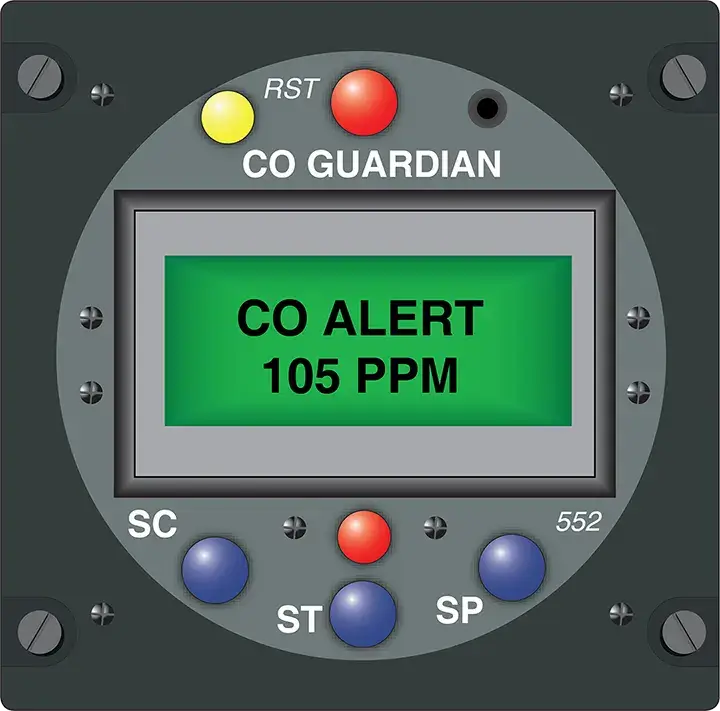
Portable carbon monoxide detectors may require replacement of their indicating elements or other servicing in accordance with the manufacturer’s instructions. The detector should be maintained and inspected according to the applicable maintenance requirements.
Aircraft that utilize exhaust shroud-type heating systems or combustion heaters are more likely to have carbon monoxide introduced into the cabin if a defect or leak allows exhaust gases to enter the heating or ventilation system.
It is very important to identify the source of carbon monoxide whenever it is detected. Various leak checks and inspections for cracks or defects must be performed regularly whenever a combustion source is also used for cabin heating.
If carbon monoxide contamination is suspected during flight, the appropriate emergency procedures should be followed. These may include using supplemental oxygen, shutting off the suspected source of contamination, increasing ventilation when appropriate, and landing as soon as practicable. The aircraft should not be returned to service until the source of contamination has been identified and corrected.