
Pressure is an important physical principle in aviation. It affects aircraft instruments, engine operation, fuel and oil systems, hydraulic systems, and cabin pressurization. Understanding pressure and the different ways it is measured is essential when studying aircraft systems and their operation.
What Is Pressure?
Pressure is the amount of force acting on a specific amount of surface area. The force is typically measured in pounds and the surface area in square inches, making the units of pressure pounds per square inch (psi).
For example, if a 100-lb weight is placed on top of a block with a surface area of 10 in², the average pressure exerted on the block is 10 lb for each square inch:
Pressure = Force ÷ Area
Pressure = 100 ÷ 10
Pressure = 10 psi
When atmospheric pressure is being measured, in addition to psi, other units of pressure measurement can be used. These include inches or millimeters of mercury and millibars.
Standard-day atmospheric pressure is approximately equal to:
- 14.7 psi
- 29.92 inches of mercury (inHg)
- 760 millimeters of mercury (mmHg)
- 1013.25 millibars (mbar)
The approximate relationship between these units of measurement is as follows:
- 1 psi = 2.04 inHg
- 1 psi = 51.7 mmHg
- 1 psi = 68.9 mbar
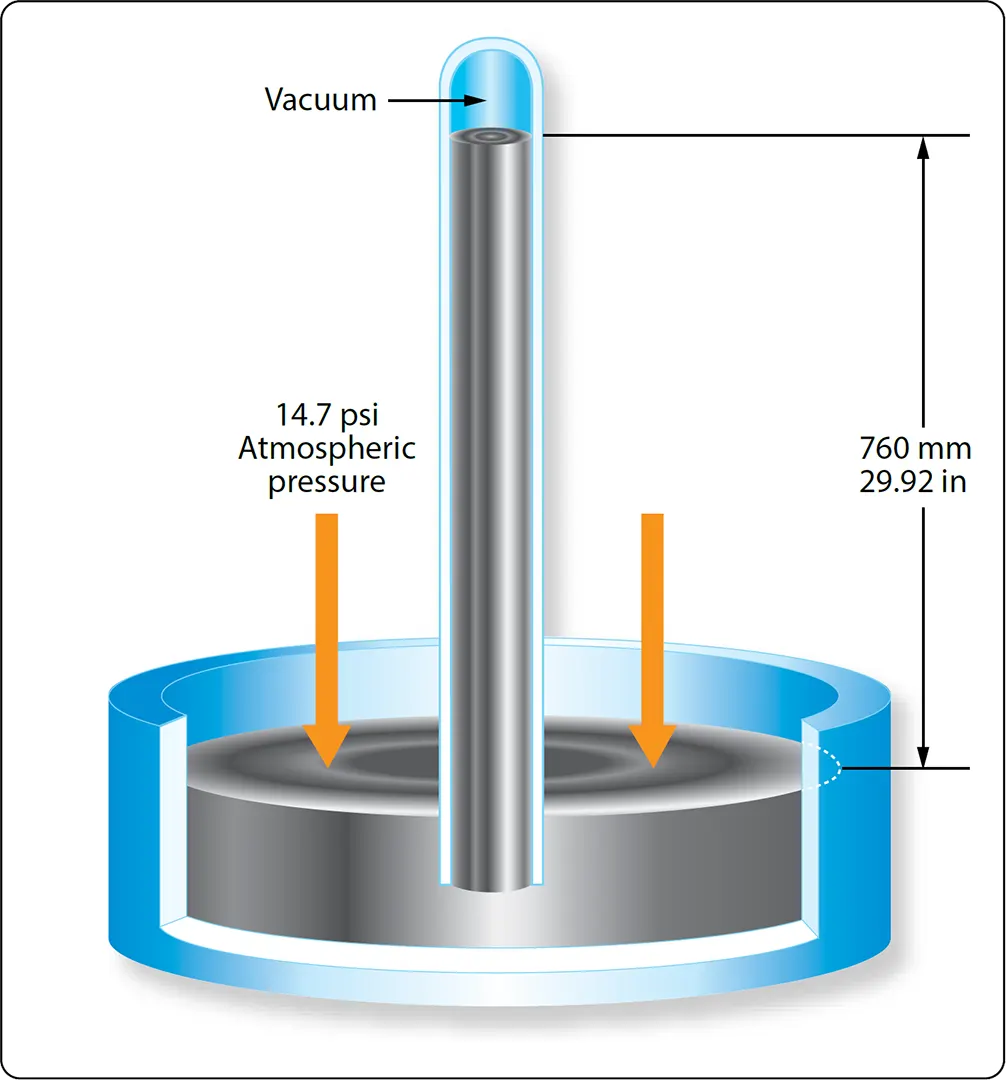
The concept behind measuring pressure in inches of mercury involves filling a closed-end tube with liquid mercury, covering the open end, and then turning the tube upside down into an open container of mercury. When the open end of the tube is uncovered while submerged in the mercury, the mercury inside the tube falls until the downward pressure exerted by the mercury column is balanced by atmospheric pressure acting on the mercury in the container.
Under standard-day atmospheric conditions, a 1-in² column of air extending from the Earth’s surface to the top of the atmosphere would weigh approximately 14.7 lb. A 1-in² column of mercury, 29.92 inches tall, would also exert a pressure equivalent to approximately 14.7 psi. That is why 14.7 psi is equal to 29.92 inHg.
Figure 1 demonstrates this principle.
Gauge Pressure
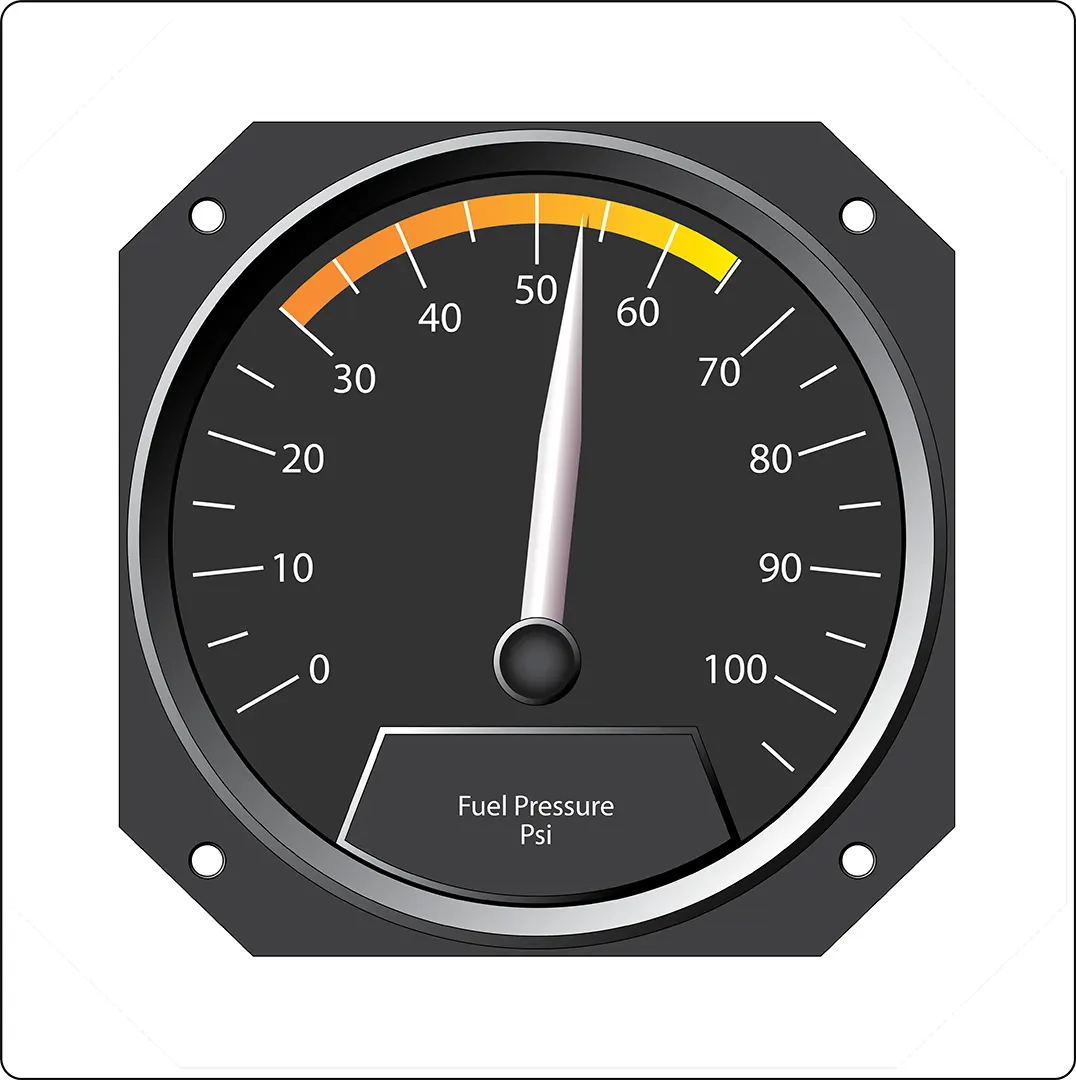
Gauge pressure (psig) is a pressure reading that indicates pressure above or below the surrounding atmospheric pressure. Most common pressure gauges, such as oil pressure gauges, fuel pressure gauges, and hydraulic system pressure gauges, display pressure relative to ambient atmospheric pressure.
This can be seen on the fuel pressure gauge shown in Figure 2. When the oil, fuel, or hydraulic pump is not operating and no pressure is being produced, the gauge will normally read zero because the pressure inside the system is equal to the surrounding atmospheric pressure.
Absolute Pressure
A pressure instrument that includes atmospheric pressure in its reading measures what is known as absolute pressure, or psia.
Absolute pressure is equal to gauge pressure plus atmospheric pressure.
Absolute Pressure = Gauge Pressure + Atmospheric Pressure
If someone connected an absolute-pressure-indicating instrument to an engine’s oil system, the instrument would read atmospheric pressure when the engine was not running. Since this would not make good sense to the typical operator, conventional oil pressure gauges generally display gauge pressure rather than absolute pressure.
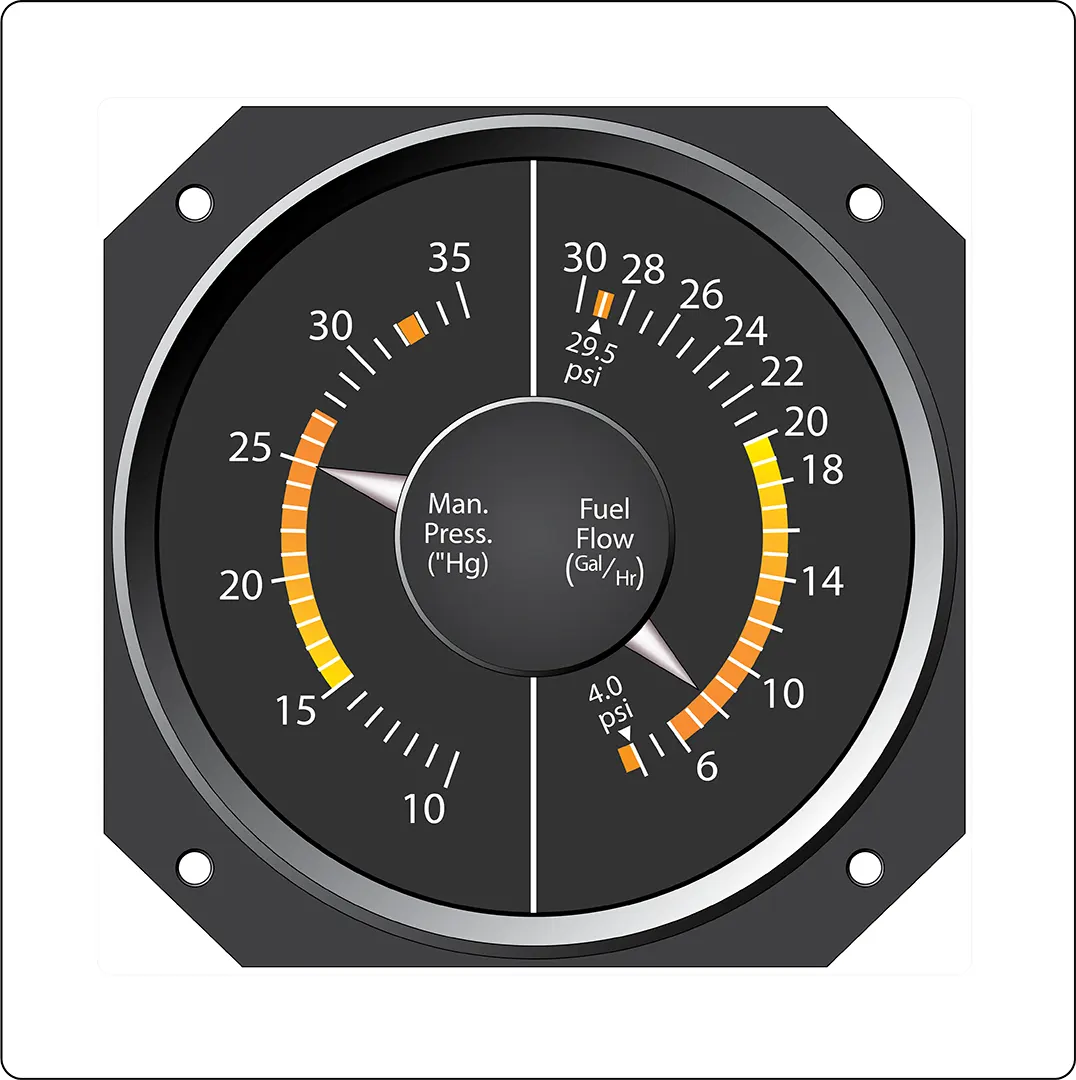
For manifold pressure in a piston engine, however, an absolute-pressure gauge is useful. Manifold pressure on a piston engine can read below atmospheric pressure when the engine is not supercharged, or above atmospheric pressure when the engine is supercharged.
An absolute-pressure gauge can show this range of readings. Figure 3 shows a manifold pressure gauge with a readout ranging from approximately 10 inHg to 35 inHg. Remember that 29.92 inHg represents standard-day atmospheric pressure.
Differential Pressure
Differential pressure, or psid, is the difference between pressures measured at two different locations within a system.
For example, in a turbine engine oil system, pressure is measured as oil enters the oil filter and as it leaves the filter. These two pressure readings are used to determine the pressure difference across the filter.
Across anything that offers resistance to flow, such as an oil filter, there will normally be a pressure drop. If the filter starts to clog, the pressure difference across it becomes greater. When the pressure drop reaches a predetermined limit, it can activate an advisory light on the flight deck.
Figure 4 shows a differential pressure gauge for the pressurization system on a Boeing 737. In this case, the pressure difference is between the inside and the outside of the airplane.
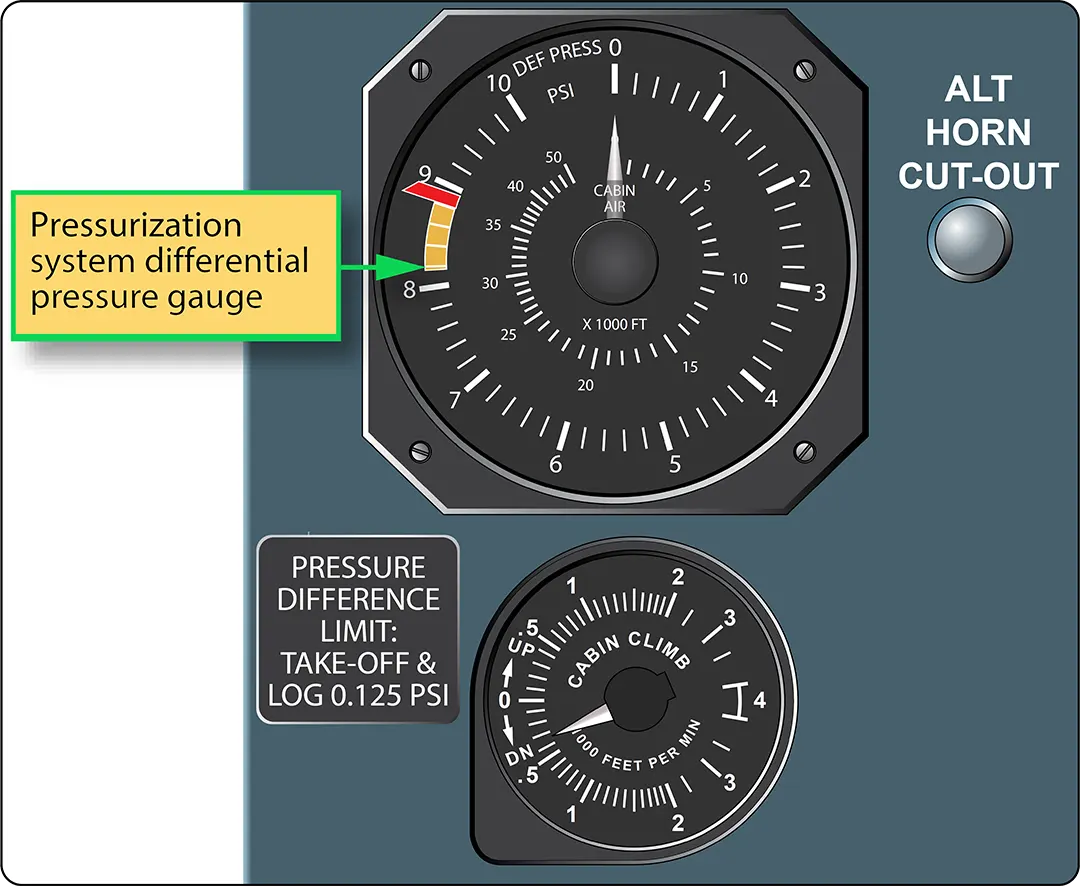
If the pressure difference becomes too great, the aircraft structure could become overstressed.